
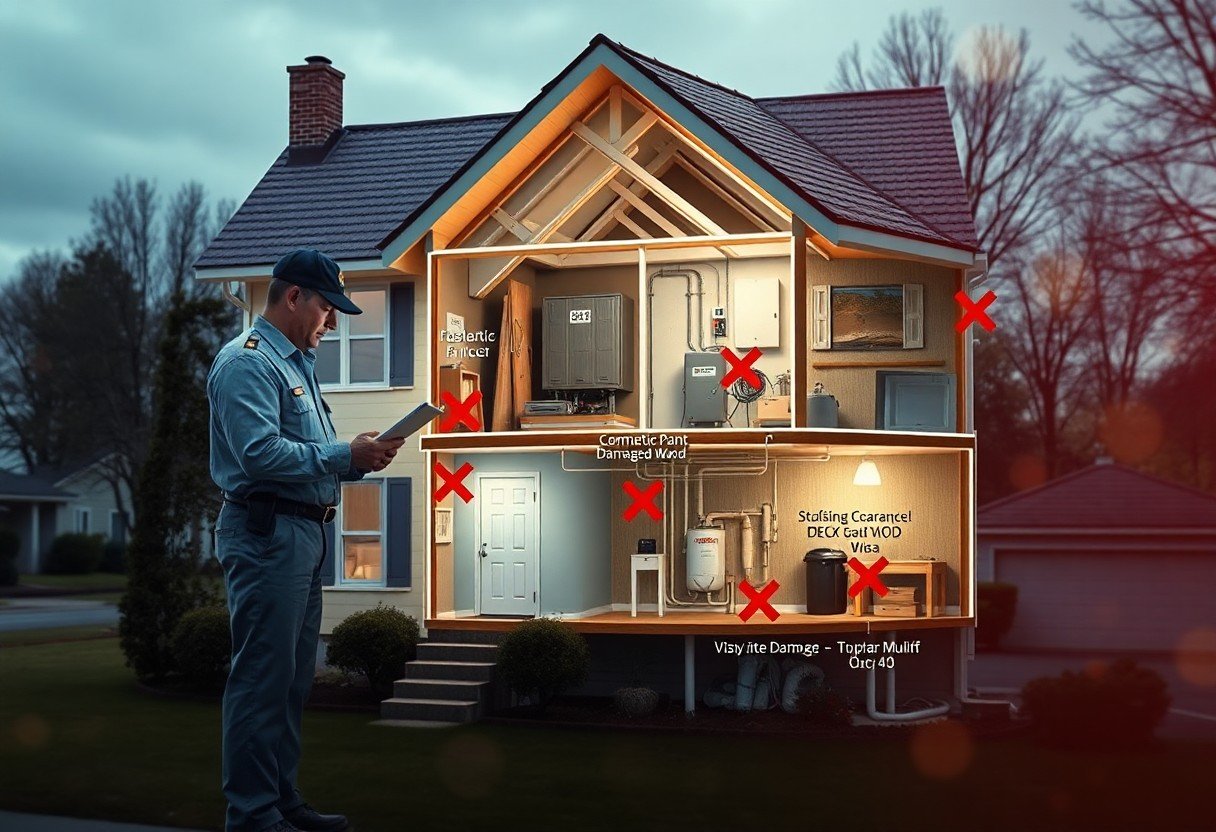
You should know what a home inspection covers-structural systems, roofing, plumbing, electrical, HVAC, and visible safety issues-and what it does not: hidden defects, pest damage, and full code compliance.
Key Takeaways:
- Inspections evaluate visible, accessible components including roof, exterior, foundation, structural systems, electrical, plumbing, HVAC, and built-in appliances.
- Report documents observed defects, safety hazards, and recommended repairs or specialist follow-up; it does not certify future condition or full code compliance.
- Hidden or concealed issues such as mold behind walls, buried pest damage, asbestos, lead paint, and some insulation problems are typically not covered without targeted testing.
- Inspections exclude repair cost estimates, removal of personal property, cosmetic issues outside system function, and invasive or destructive testing unless contracted.
- Buyer or seller should order specialized inspections (pest, radon, sewer scope, HVAC or structural engineers) when concerns fall outside a general home inspection’s scope.
The Scope of a Standard Visual Inspection
Inspection typically focuses on visible, accessible components-roof, structure, plumbing, electrical, HVAC, windows, and foundation-so you receive a clear snapshot of present conditions and any safety concerns without invasive testing.
Defining Industry Standards and Ethics
Standards set what inspectors assess, the reporting format, and ethical limits, so you can expect consistent, documented findings aligned with professional association guidelines.
The Objective Nature of the Evaluation
Inspectors evaluate conditions based on observable evidence and code references, providing you a fact-based report rather than subjective opinions.
You can use that objective report to compare properties, estimate repair costs, and request targeted seller concessions; inspectors avoid speculation and note only what they can see, so you may need specialists for concealed issues.
Critical Exterior Systems and Components
Exterior inspections review siding, trim, windows, doors, porches, decks, walkways and visible drainage and flashing so you understand which exterior issues affect safety, weatherproofing, and potential water intrusion.
Roof Integrity, Flashing, and Drainage
Roof inspections evaluate shingles, flashing, gutters, downspouts and ventilation so you can spot leaks, installation flaws, and drainage problems before interior damage occurs.
Foundation Stability and Exterior Siding
Foundation inspections examine grading, visible cracks, moisture stains and siding attachment so you can evaluate movement, water intrusion risk, and potential decay affecting structural performance.
If you spot horizontal cracks, bowed siding, uneven floors or doors that bind, have a structural engineer or specialist assess for settlement, poor grading, or water pressure that can compromise the foundation and cladding.
Essential Interior Infrastructure
Inside your inspection, interior systems are checked for visible damage, moisture intrusion, and basic operation so you can identify immediate safety issues and items needing specialist evaluation.
Electrical Panels and Distribution Systems
Panels are inspected for correct labeling, accessible shutoffs, signs of overheating, improper wiring, and obvious safety hazards, though you should expect no load testing or invasive circuit analysis during a standard inspection.
Plumbing Fixtures and HVAC Functionality
Plumbing fixtures and HVAC are evaluated for leaks, drainage, basic water pressure, and operational startup so you can detect obvious failures; detailed efficiency testing and concealed leak searches are outside a routine inspection.
During the check, water heaters are visually assessed for corrosion, leaks, and venting, and HVAC systems are run to observe cycling, airflow, and thermostat response, but refrigerant levels, combustion analysis, and hidden duct or pipe repairs require licensed specialists.
Structural and Safety Evaluations
Inspectors evaluate foundations, framing, roof connections, and visible safety hazards, giving you a clear picture of structural soundness and urgent repairs that could affect safety or resale value.
Attic Ventilation and Insulation Quality
Attic inspections measure insulation depth, detect gaps or compression, and assess ventilation and roof deck condition so you understand energy loss, moisture risk, and upgrade needs for comfort and efficiency.
Basement Moisture and Load-Bearing Walls
Basement inspections check for water stains, mold, efflorescence, and the integrity of footings and load-bearing walls so you can gauge needed waterproofing or structural reinforcement.
If you observe persistent dampness, trace its source and timing to determine whether exterior grading, perimeter drains, or interior sump systems are appropriate. You should engage a structural engineer for significant cracks, bowed walls, or unclear load paths so they can recommend anchors, carbon fiber straps, or underpinning to secure the foundation.
Interpreting the Final Inspection Report
Inspectors present findings that you should read closely, focusing on safety issues, major defects, and recommended repairs; use the summary, photos, and severity ratings to prioritize immediate actions versus deferred maintenance.
Differentiating Maintenance Items from Material Defects
Differentiating routine maintenance like gutter cleaning or caulking from material defects such as structural or system failures helps you determine whether to request repairs, accept minor fixes, or budget for future replacements.
Utilizing Findings for Real Estate Negotiations
Use documented defects and inspector cost estimates to justify repair requests, price reductions, or closing credits; focus negotiations on material issues the report identifies and present clear documentation to the seller or agent.
When you obtain contractor quotes, compare scope and timelines with inspector notes, prioritize safety and major system repairs for immediate concessions, and convert negotiated repairs or credits into written contract amendments before closing.
To wrap up
You receive a visual evaluation of major systems-roof, foundation, plumbing, electrical, HVAC-and items affecting safety and function; the inspector notes visible defects and recommended repairs, but not hidden conditions, environmental hazards, code compliance, pest infestations, or guarantees about future performance.
FAQ
Q: What does a standard home inspection typically cover?
A: A standard home inspection is a non-invasive, visual examination of the readily accessible areas of a home. The inspector evaluates the roof covering and visible roof structure, attic and insulation, exterior components (siding, trim, doors, windows), visible foundation and structural members, interior walls, ceilings and floors, plumbing supply and drain systems and fixtures, water heater, main electrical service and distribution, heating and cooling equipment, permanently installed kitchen appliances, fireplaces and chimneys, attached garages and carports, and accessible crawlspaces and basements. The inspector will operate accessible systems and fixtures, run representative outlets with a tester, run water to check drains and leaks, and attempt to start heating and cooling equipment. The inspection follows industry standards of practice and results in a written report that documents observed defects, safety hazards, and maintenance items.
Q: What does a home inspection not cover?
A: Typical exclusions are concealed or inaccessible items, code compliance checks, cosmetic issues that do not affect function, and predictive assessments of future performance. The inspector will not perform destructive testing, open walls, move personal property, or evaluate underground utilities. Specialized services such as sewer camera scopes, well water quality testing, septic system evaluations, termite or wood‑destroying insect inspections, lead paint sampling, asbestos testing, mold sampling, and radon testing are usually outside a standard inspection unless specifically contracted. Engineering-level structural analysis and permit or governmental code enforcement review are also not part of a standard inspection.
Q: Will the inspector test appliances, plumbing fixtures, and the electrical system?
A: The inspector will operate accessible, permanent appliances and major systems to verify basic function: run built‑in appliances if they are connected, operate a representative number of electrical outlets and switches, flush toilets, run sinks and showers, inspect visible plumbing for active leaks, and try to start the furnace and air conditioner. The inspector does not disassemble appliances or systems, pressurize gas lines for leaks, or perform full electrical panel load testing. The report will note visible defects and recommend specialist evaluation when conditions suggest hidden problems or safety risks.
Q: Are mold, radon, asbestos, lead, and pests included in a standard inspection?
A: Environmental hazards and pest issues generally require separate, specialized inspections and laboratory testing. The inspector will document visible signs that suggest mold growth, water intrusion, wood‑destroying insect damage, or other hazards, but will not perform lab sampling or certified radon testing unless those services are requested. Certified professionals are needed for sampling, treatment plans, and regulatory compliance related to asbestos, lead, radon, mold, and termite control.
Q: How should I use the inspection report and what are the recommended next steps?
A: Use the inspection report as a prioritized checklist: identify safety hazards and major defects first, then note items for routine maintenance and cosmetic attention. Present documented safety and major system issues to the seller for repair, credit, or price adjustment per your purchase contract. Hire qualified contractors for estimates and specialist follow-ups on items flagged in the report, and consider additional targeted tests (radon, sewer scope, well testing, pest inspection) when recommended. Attend the inspection when possible to see issues firsthand and ask the inspector clarifying questions about system condition and maintenance needs.