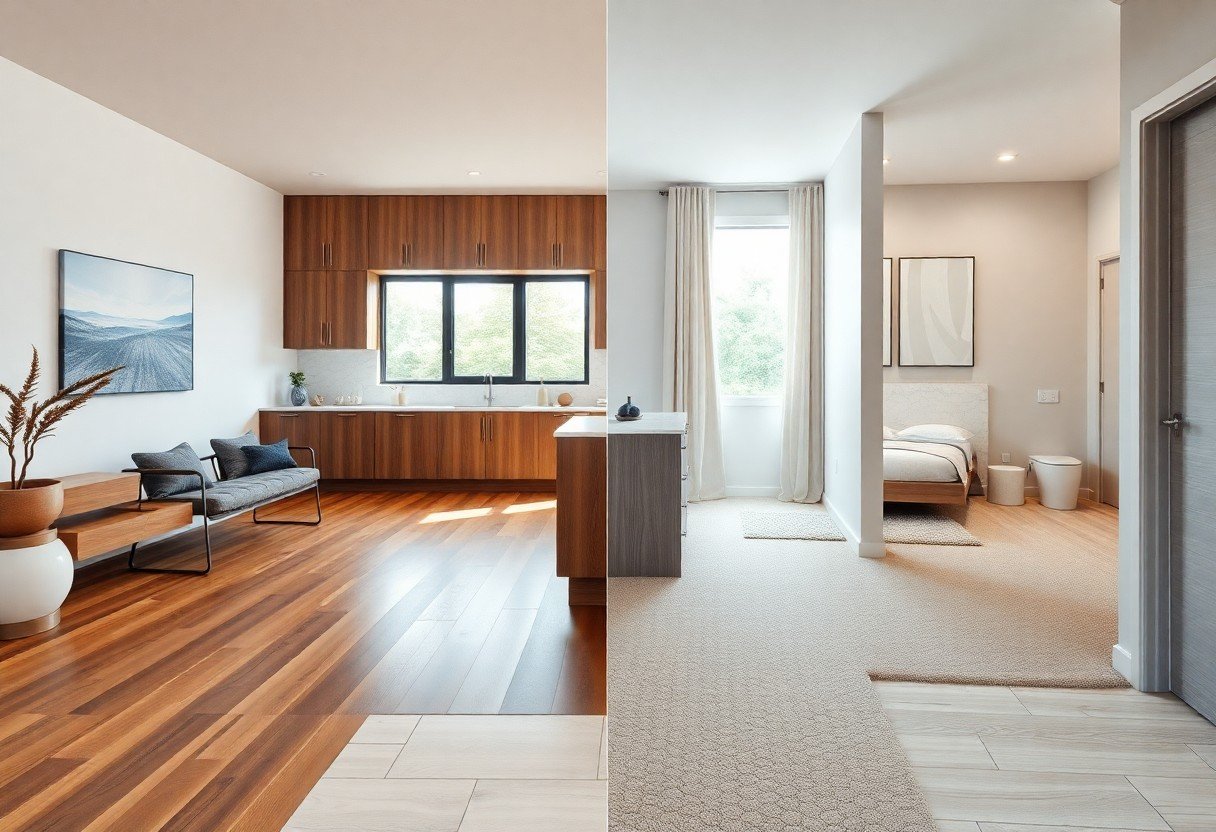
With varied traffic, moisture and style demands across rooms, you should select flooring that matches each space’s function: durable tile for bathrooms, warm hardwood for living areas, resilient vinyl for kitchens and waterproof options for basements to ensure longevity and easy care.
Key Takeaways:
- Kitchen: Porcelain or ceramic tile and waterproof luxury vinyl plank (LVP) perform best for spills, heavy traffic, and easy cleaning; consider grout color and underfloor heating for comfort.
- Bathroom and laundry: Porcelain tile, natural stone with proper sealing, or sheet/vinyl and waterproof LVP prevent water damage and provide slip-resistant options.
- Living room: Engineered hardwood offers the look of wood with better dimensional stability; LVP provides a lower-cost, water-resistant alternative-use area rugs for warmth and acoustics.
- Bedroom: Carpet adds softness and sound absorption; cork or engineered hardwood are good for allergy-prone households when paired with washable rugs.
- Basement and entry: Waterproof vinyl, porcelain tile, or sealed concrete resist moisture and stains; choose textured, slip-resistant finishes for high-traffic entry zones.
Living Areas and Entryways
Living areas and entryways need flooring that balances style and durability; you should choose materials that handle foot traffic, occasional spills, and look cohesive with adjacent rooms.
Solid Hardwood for Timeless Elegance
Solid hardwood offers enduring warmth and resale appeal, so you can refinish it when it scuffs and maintain a cohesive, high-end look throughout your living spaces.
High-Traffic Laminate for Active Households
Durable high-traffic laminate replicates wood or tile while resisting scratches and moisture, giving you a low-maintenance surface ideal for busy households.
Choose laminate with a high AC rating, tight locking planks, and a waterproof core if you have pets or kids, and pair it with quality underlayment to reduce noise and improve comfort.
Kitchens and Dining Spaces
You need flooring that handles spills, heat, and heavy foot traffic while still reflecting your style; prioritize easy cleaning, slip resistance, and finishes that match cabinetry and lighting.
Luxury Vinyl Plank for Moisture Resistance
Vinyl plank resists moisture and dents, so you can clean up spills quickly and keep a wood look without high upkeep; choose thicker wear layers for busy households.
Porcelain Tile for Maximum Durability
Porcelain tile offers unmatched hardness and scratch resistance, making it ideal where you frequently move chairs or drop cookware while maintaining colorfastness.
Installation and grout choice impact longevity, so you should use proper underlayment, tight tolerances, and a high-quality sealer to prevent staining and reduce moisture transfer.
Bathrooms and Laundry Rooms
Bathrooms and laundry rooms demand water-resistant, durable floors; you should favor tile or waterproof vinyl to avoid mold, warping, and frequent repairs while keeping maintenance simple.
Slip-Resistant Ceramic Solutions
Ceramic tiles offer textured finishes that reduce slips; you can pair them with proper grout sealing for long life and straightforward cleaning in wet spaces.
Waterproof Sheet Vinyl for Seamless Protection
Vinyl sheets resist standing water and roll out with minimal seams at edges, so you can prevent leaks and simplify cleaning in laundry and bath zones.
You should expect easy installation over level subfloors; professional heat-welding at joins reduces water intrusion, while pressure-sensitive adhesives keep edges secure. Sheet vinyl provides warmth underfoot, low cost, and a wide range of patterns; inspect seams annually and reseal as needed to maximize lifespan.
Bedrooms and Private Sanctuaries
You’ll want soft, warm underfoot options that muffle noise, resist cold, and complement calming decor so bedrooms feel restorative and private.
Wall-to-Wall Carpeting for Thermal Comfort
Carpeting wraps you in insulation, reduces cold morning shocks, and provides a cushioned surface ideal for dressing and lounging.
Sustainable Cork for Sound Insulation
Cork gives you natural sound absorption, gentle underfoot warmth, and a low-VOC option that helps create quieter, healthier sleep spaces.
Beyond its acoustic benefits, cork compresses to absorb footsteps yet rebounds to resist dents, and you can install it as tiles or floating planks over underlayment for extra sound control. You’ll value its hypoallergenic surface, simple upkeep-regular sweeping and occasional damp mopping-and finishes that increase moisture resistance near en-suites. Harvested from renewable bark, cork ages gracefully while decreasing airborne echoes that interfere with sleep, making it an eco-minded, long-lasting choice.
Basements and Below-Grade Levels
Basements demand moisture-resistant, low-profile flooring so you can avoid warping and mold; choose luxury vinyl plank, tile, or sealed concrete for reliable performance and easy maintenance.
Engineered Hardwood Performance
Engineered hardwood lets you achieve a real-wood appearance with better dimensional stability below grade; pair it with a vapor barrier and floating installation to reduce swelling risk.
Polished Concrete for Modern Utility
Polished concrete offers durable, low-maintenance flooring that tolerates humidity and occasional seepage; you can customize color, sheen, and aggregate exposure to match modern or industrial designs.
You must prep the slab, fix cracks, and apply a densifier before polishing; expect long service life, periodic resealing, and choose anti-slip treatments if the area is often damp.
Selecting Materials Based on Lifestyle
Your daily routine should shape material choices: choose water-resistant vinyl for busy kitchens, soft carpet for restful bedrooms, and durable hardwood in living areas; see How to Choose the Right Flooring Material for Each Room to match options to how you live.
Assessing Wear Layers and Scratch Resistance
Check wear-layer thickness and finish type so your floors resist pets, kids, and heavy foot traffic; higher wear layers and scratch-resistant coatings extend appearance and reduce refinishing frequency.
Long-Term Maintenance and Resale Value
Consider maintenance demands versus resale impact: hardwood can increase value but needs occasional refinishing, while low-maintenance options may attract time-pressed buyers and save ongoing costs.
When planning, tally cleaning, repair, and replacement costs over expected lifespans so you compare total ownership expense; choose neutral finishes to widen buyer appeal and document maintenance to support future value.
Summing up
To wrap up, you should choose durable tile for wet rooms, hardwood or engineered wood for living areas, and resilient vinyl or laminate for high-traffic or budget-conscious spaces; match material to use, moisture, and maintenance to ensure long-lasting, attractive floors.
FAQ
Q: What’s the best flooring for a kitchen?
A: Kitchen floors must resist moisture, spills, heavy foot traffic, and dropped items while remaining easy to clean. Porcelain or ceramic tile provides top-tier water resistance, a long lifespan, and many style options; choose textured or matte finishes to reduce slipping. Luxury vinyl plank (LVP) offers a wood look with outstanding water resistance and softer feel underfoot, making it a lower-cost, low-maintenance alternative. Engineered hardwood can work in open-plan kitchens if seams are tight and the floor is sealed, but avoid solid hardwood where standing water is likely. Place durable mats by the sink and stove and use transition strips between different flooring types for a neat, safe edge.
Q: Which flooring is best for bathrooms?
A: Bathroom floors require excellent waterproofing and slip resistance plus easy grout maintenance. Porcelain or ceramic tile is the most common choice for wet areas because it sheds water, withstands steam, and comes in many slip-resistant finishes. Sheet vinyl and waterproof LVP are practical options for budget-friendly, warm-feeling floors that install quickly with fewer grout lines. Natural stone creates a luxurious look but needs regular sealing and textured finishes to limit slipping. Plan for a waterproof membrane under tile, slope the subfloor toward drains where needed, and consider heated flooring under tile for comfort.
Q: What flooring suits living rooms and open-plan areas?
A: Living rooms benefit from a balance of comfort, aesthetics, durability, and acoustic control. Engineered hardwood and solid hardwood deliver classic warmth and can be refinished over time; choose engineered when moisture or subfloor instability is a concern. LVP mimics hardwood or stone while resisting scratches and moisture in high-traffic zones. Carpet adds softness and noise reduction, making it ideal for seating areas, while area rugs on hard surfaces create visual warmth and comfort. Use quality underlayment to reduce sound transmission and improve comfort for upstairs/downstairs living.
Q: What should I choose for bedrooms?
A: Bedrooms prioritize comfort, warmth, and quiet so softer, warmer surfaces are often preferred. Plush carpet provides insulation, excellent acoustics, and a cozy feel underfoot, especially in colder climates. Hardwood or LVP with area rugs combines a polished look with softness where you need it most, and cork offers natural warmth and resilience with eco-friendly appeal. Select durable padding or underlayment to improve thermal performance and limit impact noise. If allergies are a concern, choose tightly woven, low-pile carpets or hard floors with washable rugs to control dust.
Q: What flooring works best in entryways, mudrooms, and basements?
A: Entryways and mudrooms need floors that handle dirt, water, snow, and heavy use while staying easy to clean. Porcelain tile, LVP, and rubber tile are top choices because they resist moisture and abrasion and tolerate frequent cleaning. Install a durable threshold and drainage-friendly layouts to keep moisture out of living areas. Basements often face humidity and occasional flooding, so waterproof LVP, porcelain tile, or sealed concrete are the most reliable options; avoid standard hardwood unless a full moisture-control system and engineered products designed for basements are used. Consider a professional moisture test before choosing basement flooring and plan for proper subfloor systems and vapor barriers where required.