Many homeowners face basement moisture, so you should locate leaks, fix drainage and grading, dry and dehumidify, seal walls and floors, install a vapor barrier or interior drainage system, and monitor humidity before finishing.
Key Takeaways:
- Inspect foundation, walls, and floor for cracks, water stains, or efflorescence; repair cracks and track down active leak sources before finishing.
- Correct exterior drainage by grading soil away from the foundation, extending downspouts, and maintaining gutters to divert water from the house.
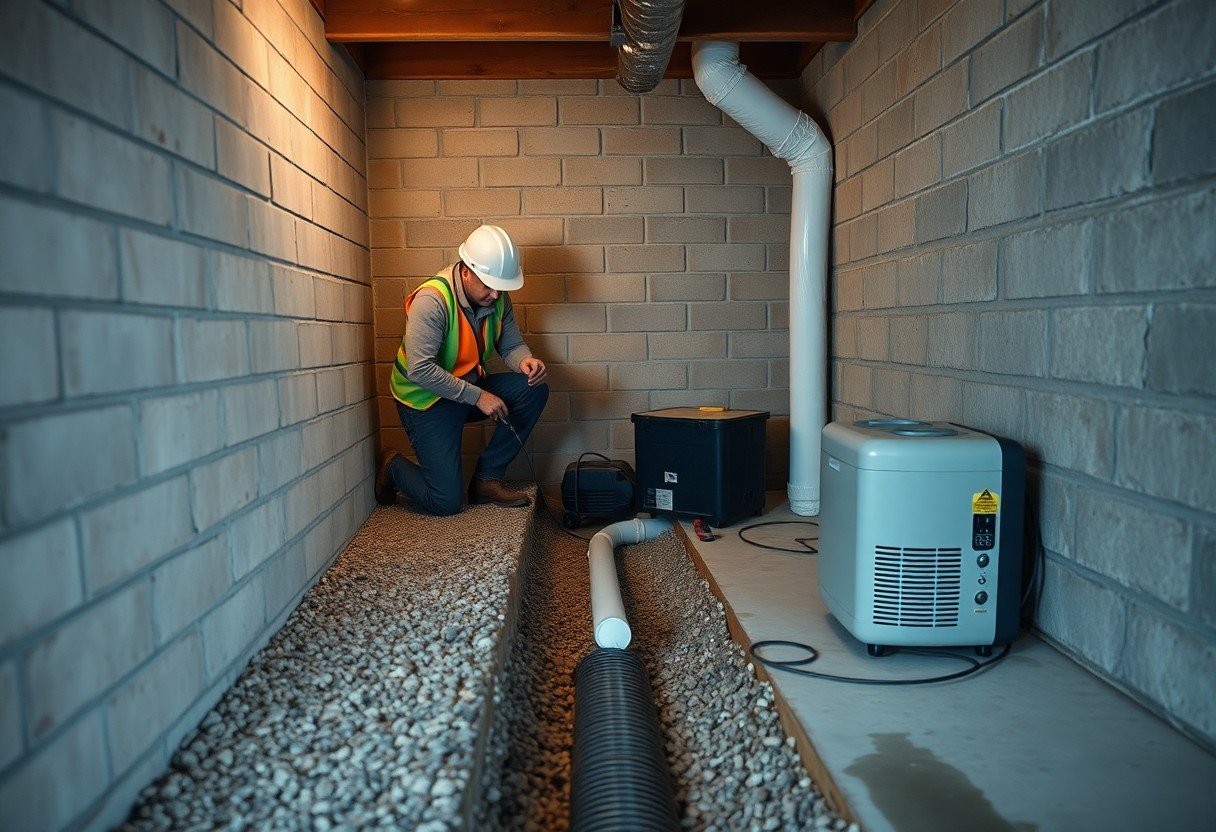
- Install or upgrade drainage systems such as exterior waterproofing membranes, a French drain, or an interior perimeter drain feeding to a sump pump when seepage or hydrostatic pressure exists.
- Control indoor moisture with a properly sized dehumidifier, continuous ventilation, and a hygrometer to keep relative humidity below about 50%.
- Use moisture-resistant finishing materials and insulation-closed-cell foam or rigid foam, cement board or moisture-resistant drywall, and floor vapor barriers when appropriate; consult a professional for complex issues.
Identifying the Root Cause of Moisture
Check structural issues, exterior grading, plumbing, and ventilation to trace moisture sources; you should inspect gutters, downspouts, foundation cracks, and any interior leaks before finishing to prevent recurring problems.
Distinguishing Between Condensation and Seepage
Determine whether moisture is condensation or seepage by observing timing, surface temperature, and residue; you’ll see condensation on cold surfaces during humid conditions, while seepage leaves persistent dampness, stains, or efflorescence after rain.
Conducting the Plastic Sheet Moisture Test
Place a 2×2-foot plastic sheet on the slab, tape the edges, and note the start time; after 24-72 hours check under the film-if moisture accumulates or the concrete darkens, you’re facing elevated vapor transmission.
Interpret results by checking for darkening, water beads, or persistent dampness under the sheet after the test period; you should run multiple tests (center, near walls, low spots) and record ambient humidity. If the sheet shows moisture, plan for slab sealing, improved exterior drainage, sub-slab drainage, or a moisture-tolerant floor system and consider professional evaluation for high groundwater or structural cracks.
Managing External Drainage and Grading
Manage surface water by keeping gutters and drains clear, extending downspouts away from the foundation, and maintaining a downhill grade so you prevent water from pooling against walls before finishing the basement.
Optimizing Gutter and Downspout Diversion
Extend downspouts at least six feet or into buried drains, clean gutters regularly, and use splash blocks or flexible extenders so you direct roof runoff away from your foundation and reduce basement moisture risks.
Correcting Soil Grade to Direct Water Away
Regrade soil to slope away from your foundation at about a 5% grade for the first ten feet, compact fill, and keep planting beds lower than the exterior grade so water flows outward.
Check grade with a string level or laser, add clean fill to low spots, avoid piling mulch against foundations, and install a French drain where you still see surface or subsurface flow entering your basement.
Interior Foundation Sealing Techniques
Sealing interior foundation walls with hydraulic cement, epoxy beads, and membrane strips helps you block both active leaks and vapor migration before framing and insulation.
Applying Crystalline Waterproofing Coatings
Crystalline coatings penetrate concrete pores and form insoluble crystals that reduce capillary water flow, so you can apply finishes on a drier, more stable surface.
Injecting Epoxy or Polyurethane into Wall Cracks
Injecting epoxy bonds structural cracks for strength and stiffness, while polyurethane foams expand to seal active leaks, allowing you to stop water entry before finishing.
When choosing between options, select epoxy for static structural cracks that need rigid repair and polyurethane for active, leaking joints that require flexible sealing; you should clean and dry the crack, inject from the bottom up at manufacturer-recommended pressures, and consider a professional for deep or multiple fissures to ensure full penetration and lasting performance.
Implementing Mechanical Moisture Control
Dehumidifiers combined with controlled ventilation let you maintain target relative humidity, reduce condensation risk, and protect framing and finishes while you complete basement finishing work.
Sizing Dehumidification Systems for Basement Volume
Calculate capacity from cubic feet and local moisture load so you choose a unit rated for continuous operation with a condensate pump or gravity drain and automatic defrost for cold basements.
Enhancing Air Circulation and Ventilation
Position fans and ducts to move air across damp surfaces, provide balanced supply and exhaust, and prevent stagnant pockets; you should consider an HRV or ERV for fresh-air exchange without adding humidity.
Balance airflow to avoid negative pressure that pulls in humid outdoor air through cracks; you should size ducting, use adjustable vents, and monitor with inexpensive hygrometers to maintain consistent moisture control.
Vapor Barrier Installation Requirements
Install a continuous vapor barrier rated for below-grade use; you should overlap seams by 6 inches, tape joints, run the membrane up walls, and consult How do I finish a basement for moisture control?
Selecting High-Density Polyethylene Membranes
Choose high-density polyethylene membranes at least 10 mil thick that are UV-stable and puncture-resistant; you should verify manufacturer specs and local code before installing.
Proper Sealing Protocols for Subfloors and Walls
Seal seams with manufacturer-approved tape, caulk rim joists and pipe penetrations, and you must tie the barrier into wall damp-proofing and floor drains to prevent moisture bypass.
Inspect and prepare surfaces by removing dust and efflorescence; you should prime porous masonry, apply manufacturer-recommended tape to all overlaps, and use a compatible elastomeric or polyurethane sealant at rim joists and utility penetrations. When fastening, avoid punctures-adhere or use specialized washers and clamping collars-and verify airtight seals with a moisture meter before finishing.
Pre-Finishing Inspection and Validation
Inspection confirms that all moisture-control measures function: dehumidifiers run, sump pumps cycle, and wall drains are sealed, so you proceed only when readings stay stable for at least two weeks.
Monitoring Relative Humidity Thresholds
Measure and log RH in the finished area and beneath insulation; keep interior RH below 60% and aim for 30-50% during warm months so you avoid mold and material deterioration.
Verifying Hydrostatic Pressure Stability
Assess groundwater behavior by checking basement watermarks, test-bore readings, and sump pit recovery; you should see consistent, non-fluctuating levels across multiple rain events before finishing.
You should monitor seasonal fluctuations by recording sump water levels daily during storms and weekly otherwise. Install observation wells or piezometers to quantify pressure changes and compare against dry-season baselines. Address rising trends with exterior drainage upgrades, larger pump capacity, or interior drainage membranes before applying finishes to prevent long-term damage.
Conclusion
With this in mind you should test for leaks, install proper drainage and a vapor barrier, repair cracks and use a dehumidifier, and choose moisture-resistant finishes so you can finish the basement safely and prevent mold, odors, and structural damage.
FAQ
Q: How can I identify the source of basement moisture before finishing?
A: Inspect walls and floors for visible signs such as efflorescence, peeling paint, dark stains, mold growth, and water lines. Check exterior grading, downspouts, and gutters for improper drainage or blocked outlets that can direct water toward the foundation. Test for condensation by taping a 12″x12″ piece of clear plastic to the wall or floor for 24-48 hours; trapped moisture under the plastic indicates vapor or condensation rather than a bulk leak. Use a hygrometer to measure relative humidity and a moisture meter for concrete or wood; readings above 60% or elevated material moisture content require remediation. If you see active water intrusion, hydrostatic pressure, or persistent dampness, schedule a professional inspection to locate hidden leaks or plumbing faults.
Q: What tests should I perform to decide between interior fixes and exterior waterproofing?
A: Begin with visual and diagnostic checks: trace moisture patterns, inspect the perimeter for pooling, and run the plastic and moisture meter tests. Conduct a water test by spraying a short section of exterior wall with a hose for several minutes to see if water appears inside; interior appearance within that spot indicates exterior penetration. Perform a sump and drainage evaluation to determine if water accumulation results from poor yard drainage or high groundwater; frequent water entry during heavy rain suggests exterior solutions such as regrading, extended downspouts, or exterior waterproof membranes. If hydrostatic pressure is causing seepage through cracks or porous walls, exterior excavation and drainage are often the long-term fix. If moisture is mainly condensation or minor interior seepage, interior drainage channels, a perimeter drain with sump pump, and vapor control may be sufficient and more budget-friendly.
Q: What are effective interior waterproofing steps to take before finishing?
A: Install an interior perimeter drain system that captures water before it reaches finished surfaces and routes it to a sump pump. Apply a high-quality masonry crack repair and interior-rated waterproofing coating to active leak points and porous surfaces; follow product instructions for surface preparation and curing. Create a conditioned layer with a water-resistant wall assembly: use a drainage mat or stud walls set off from masonry, then insulate with closed-cell spray foam or rigid foam board to reduce condensation risk. Use mold- and moisture-resistant wall panels or cement board in place of standard paper-faced drywall for below-grade walls. Add a properly sized dehumidifier and ensure HVAC or ventilation will maintain relative humidity between 30% and 50%.
Q: What materials and finishes are best for floors and walls in a finished basement?
A: Select floor systems that tolerate occasional moisture and allow for a capillary break: tile over a decoupling membrane, luxury vinyl plank with a moisture-rated underlayment, or engineered hardwood installed with a vapor barrier and floating method. Avoid solid hardwood and glued-down wood directly on concrete. For walls, use cement board, glass-mat gypsum, or moisture- and mold-resistant gypsum board where load-bearing partitions are not required. Choose closed-cell spray foam for insulation when air and moisture control in one step is desired; use foam board plus a drainage plane if using stud framing. Keep finished materials elevated above the slab by a small gap or use base shoe molding to reduce direct contact with potential minor dampness.
Q: How should I maintain and monitor moisture control systems after finishing the basement?
A: Run and service the sump pump regularly, testing it monthly and replacing batteries on backup systems annually. Operate a quality dehumidifier to maintain relative humidity between 30% and 50% and clean or replace filters per manufacturer guidance. Inspect walls, floors, and seams each season for new stains, efflorescence, or musty odors that indicate moisture problems returning. Keep gutters clear and downspouts extended away from the foundation; check exterior grading after major storms or landscaping changes. Retain documentation and photos of repairs and system installations to expedite contractor assessments or insurance claims if future issues arise.