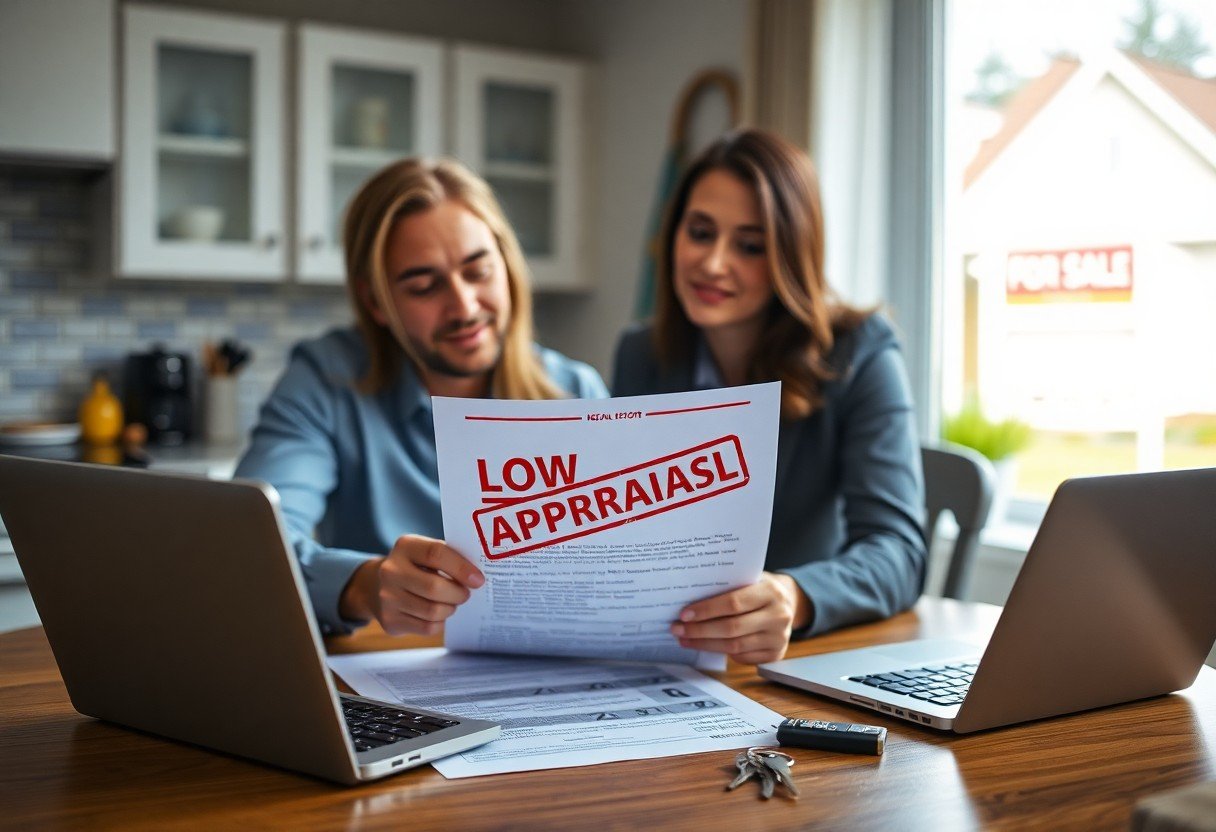
Most appraisals meet expectations, but if yours comes in low you can order a review, submit stronger comparables, request a price reduction, or split the shortfall to salvage the sale.
Key Takeaways:
- Seller can lower the price or offer a credit to bridge the gap between the appraised value and the contract price.
- Buyer can pay the difference in cash to satisfy the lender and keep the sale on track.
- Agent can request a reconsideration of value from the appraiser and submit comparable sales, photos, and repair estimates.
- Buyer or seller can order a second appraisal or an appraisal review if the original report missed comps or contained errors.
- Appraisal contingency in the purchase agreement allows the buyer to renegotiate or cancel without penalty if parties cannot agree on adjustments.
Identifying the Root Causes of a Low Appraisal
Appraisals can dip for multiple reasons; you should examine recent sales, appraisal methodology, and data accuracy to identify which issue is driving the low value before choosing your response.
Market Volatility and Lagging Comparable Sales
Market shifts and lagging comps often suppress appraised values; you should compile recent pending or closed sales, highlight changing neighborhood trends, and request updated comps or a reconsideration of value.
Market Volatility: Causes and Actions
| Cause | What you should do |
|---|---|
| Rapid price changes | Provide very recent pending/closed sales and market trend data |
| Outdated comps | Submit fresh comparables within 90 days and local listings |
Discrepancies in Property Condition or Data
Condition issues or incorrect public records can lower value; you should document upgrades, correct assessor data, and deliver clear photos, permits, and invoices to the appraiser.
Gather permits, contractor statements, and before-and-after photos to prove improvements; ask your agent to prepare a concise rebuttal package, request an appraiser revisit, or pursue a formal appraisal review if errors persist.
Scrutinizing the Appraisal Report for Inaccuracies
Scrutinize the appraisal line by line to spot factual errors, omitted upgrades, or misclassified rooms; you can dispute those items, present corrections, and pursue lender appeal steps outlined in How to Challenge a Low Home Appraisal.
Report accuracy checklist
| Square footage | Verify measurements, floor plans and permits |
| Upgrades | Provide receipts and photos |
| Room classification | Clarify misclassified or omitted spaces |
| Comparables | Check dates, distance and sale types |
Verifying Square Footage and Feature Descriptions
Confirm recorded square footage and listed features against your measurements, floor plans, permits and photos; supply that documentation so the appraiser and lender see the correct home size and upgrades.
Evaluating the Relevance of Selected Comparables
Compare chosen comps for sale date, proximity, condition, lot size and sale type; flag distant or dissimilar sales and offer more appropriate matches to support a revised value.
Use targeted evidence-recent similar sales, clear photos and price-per-square-foot comparisons-to strengthen your request for a reconsideration of value.
Comparables evaluation
| Date | Prefer sales within six months |
| Location | Same neighborhood or very close micro-market |
| Condition | Adjust for upgrades or needed repairs |
| Sale type | Exclude distressed, foreclosures or off-market deals |
Negotiating Price Adjustments with the Seller
When the buyer’s appraisal comes in low, you can reopen price talks with the seller to bridge the gap and keep the contract intact; present clear comps and a concise counteroffer to prompt a practical response.
Requesting a Reduction to Match the Appraised Value
You can request the seller reduce the price to match the appraisal, presenting the report and comparable sales to justify the change and help secure the buyer’s financing.
Finding a Compromise Through Price Sharing
Ask the seller to split the difference, with you covering part and the seller covering the rest so the sale proceeds without contract termination.
Consider proposing a specific split-percentages, a fixed dollar amount, or a seller credit toward closing costs-and offer to modify repair credits or inspection timelines in exchange; document the agreement in a written amendment, clarify lender implications, and set a firm deadline so you avoid prolonged uncertainty.
Initiating a Reconsideration of Value (ROV)
You can request a reconsideration of value by asking the lender for a formal review, submitting corrected data and solid comparables, and working with the buyer’s agent to present a clear, concise case for a higher appraisal.
Compiling Evidence of Recent Local Market Activity
Compile recent closed and pending sales, photos, MLS sheets, permits, and a brief summary highlighting upgrades or errors in the appraisal; prioritize comps from the same neighborhood and similar size and condition.
Navigating the Formal Dispute Process with the Lender
Contact the lender’s appraisal or underwriting department to file the dispute, attach your ROV package, request written responses, and track deadlines while keeping the buyer informed about progress.
Expect the lender to require a formal package and to follow specific timelines; provide a concise cover letter, corrected facts (square footage, room counts), your best comparables with adjustments, and supporting documents like MLS sheets and permits. Prepare to request the appraiser’s reconsideration notes, escalate to underwriting or the lender’s review team if needed, and keep meticulous records. If the lender denies the ROV, discuss ordering a second appraisal, obtaining a broker price opinion, or pursuing mediation while keeping the buyer updated at every step.
Financing Strategies to Bridge the Gap
You can explore options like increasing cash down payment, seller concessions, or loan restructuring to cover appraisal shortfalls without killing the deal.
Increasing the Cash Down Payment
Putting more cash down reduces the loan-to-value gap so you can meet the lender’s required equity and proceed with the purchase.
Restructuring the Loan to Account for Lower Equity
Ask your lender about a larger loan cushion, interest-only period, or extended amortization to lower payments and match the appraisal.
When you pursue loan restructuring, expect lender underwriting, possible private mortgage insurance, a higher rate or fees, and documentation requirements; run the numbers to compare monthly relief against long-term cost before consenting to changes.
Exploring Alternative Options and Contingencies
Options you can pursue include renegotiating the price, offering seller credits, splitting the appraisal gap, or asking the buyer to bring additional funds; document any agreement in writing and adjust timelines to meet contract deadlines.
Ordering a Second Appraisal via a New Lender
You can request a new appraisal through a different lender; supply recent comparable sales, invoices for improvements, and agent analysis to support a higher valuation, but be aware this may add time and fees.
Exercising the Appraisal Contingency to Exit the Deal
Exercising your appraisal contingency allows you to cancel and recover your earnest money if the appraisal is low; follow the contract’s notice requirements and deadlines to avoid liability.
If your contract allows appraisal-based termination, confirm exact notice windows, assemble comps and improvement records, consider submitting a reconsideration of value to the appraiser, and negotiate price adjustments or credits; if you opt to terminate, send written notice per contract and secure your earnest money with agent and attorney guidance.
Final Words
Upon reflecting you can challenge the appraisal, provide comps or request a second appraisal, renegotiate the price, ask the buyer to cover the gap, or walk away; consult your agent and an appraiser to protect your interests.
FAQ
Q: What should I do first if the buyer’s appraisal comes in low?
A: Start by obtaining the full appraisal report and review it line by line for factual errors in square footage, bedroom/bath counts, lot size, condition, or omitted upgrades. Ask your agent to pull comparable sales the appraiser used and compare them to more recent or better-matching comps you can document. Request a copy of the appraiser’s comparable sales map and photos to spot mismatches. If you find mistakes or strong alternative comps, prepare a concise evidence packet (signed sales contracts, MLS sheets, photos, permit records, recent upgrades) and submit a formal appraisal reconsideration request through the buyer’s lender or appraisal management company.
Q: Can the buyer still close if the appraisal is below the agreed price?
A: Closing remains possible if the parties reach a new agreement on how to cover the gap. Options include the buyer paying the difference in cash, the seller reducing the sale price to the appraised value, or both sides splitting the shortfall. Some lenders allow the buyer to increase their down payment to cover the difference; confirm the lender’s rules and the buyer’s cash availability. Absent agreement, the buyer may be able to cancel the contract and receive earnest money back if the contract contains an appraisal contingency that has not been waived.
Q: How do I challenge an appraisal that seems unfair or incomplete?
A: Gather objective evidence that supports a higher value: recent closed sales that match key attributes, pending sales, contractor invoices for improvements, permits, and neighborhood market data showing price trends. Submit this evidence in a professional, itemized reconsideration of value to the lender or appraisal management company; include a clear explanation of appraisal errors. Request an independent quality review from the appraisal management company if you suspect procedural mistakes. If those steps fail, consider ordering a second appraisal at the buyer’s expense, keeping in mind lenders often require a different appraiser or may reject a second if it appears to be shop‑around pricing.
Q: What happens if the buyer has an appraisal contingency in the contract?
A: An appraisal contingency gives the buyer negotiated options: renegotiate price or terms, request seller concessions, obtain a second appraisal, or cancel the contract and recover earnest money if parties can’t agree. The specific protections and timelines depend on the contingency language; follow the notification and cure periods spelled out in the contract. Seller response choices include lowering the price to the appraised value, offering credits for repairs or closing costs, or standing firm and risking contract termination.
Q: What steps can sellers take before listing to reduce the risk of a low appraisal?
A: Order a pre-listing or competitive-market appraisal to identify value gaps early and set a defensible list price. Perform needed repairs and obtain permits for major work to ensure the appraiser can verify condition and quality. Provide your listing agent with a professional comp packet for appraisers that includes recent comparable sales, descriptions of upgrades, contractor receipts, and neighborhood market context. Stage the home for showings and appraiser visits and make sure access to storage areas, basements, and unfinished spaces is available so square footage and condition can be accurately recorded.