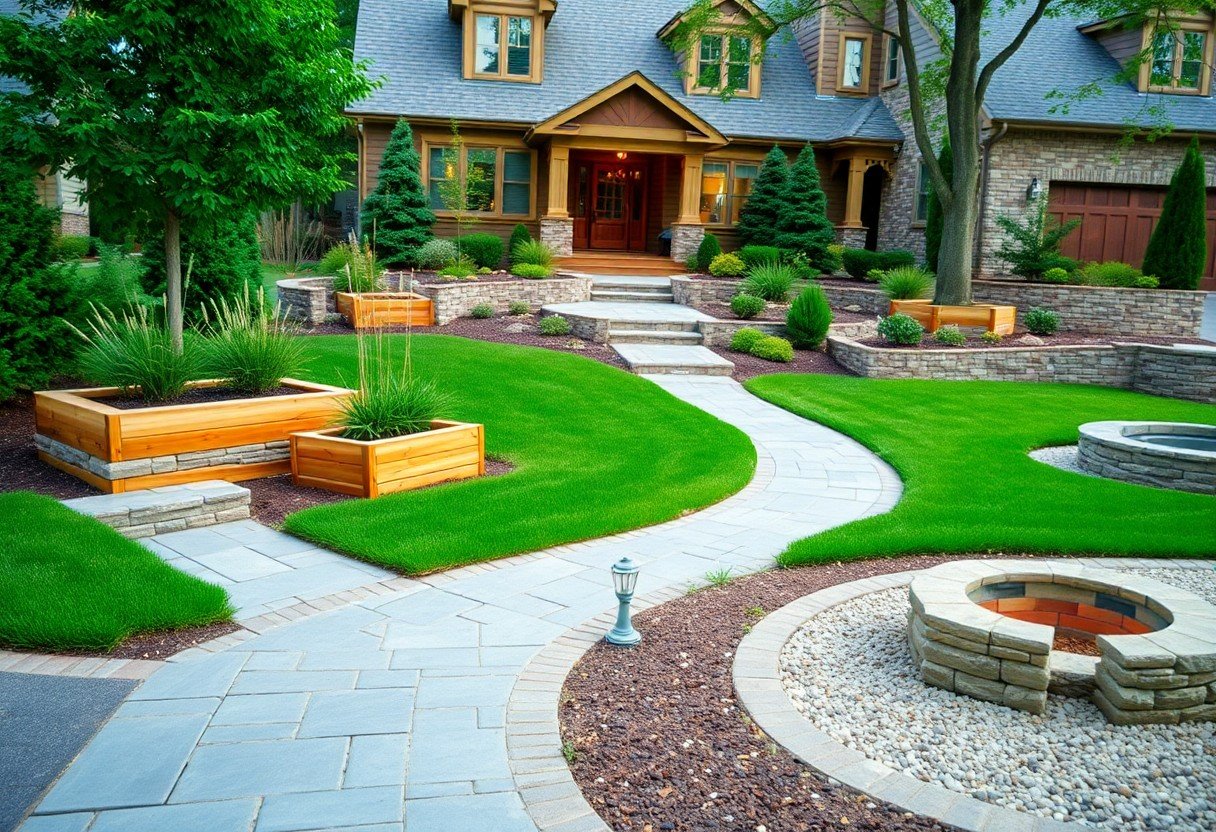
With practical upgrades like drought-tolerant plants, durable hardscapes, efficient irrigation, and clear outdoor living zones, you boost curb appeal and resale value while reducing maintenance and costs.
Key Takeaways:
- Well-designed curb appeal updates such as fresh sod, trimmed hedges, and an upgraded front walkway improve first impressions and can raise resale value.
- Low-maintenance, drought-tolerant plantings combined with efficient irrigation lower ongoing costs and attract buyers seeking manageable yards.
- Outdoor living additions like patios, decks, and quality lighting expand usable square footage and often deliver a strong return on investment.
- Thoughtful hardscaping-functional pathways, retaining walls, and effective drainage-prevents issues and adds measurable property value.
- Professional design and proper grading ensure plant placement and flow match local climate and buyer preferences, maximizing return from improvements.
High-ROI Hardscaping Features
Flagstone or Paver Patio Installations
Flagstone patios give you durable, attractive outdoor rooms that attract buyers and extend usable square footage; well-laid pavers require low maintenance and can match home style, offering strong resale return when designed with proper grading and quality base materials.
Functional Retaining Walls and Terracing
Retaining walls stabilize slopes, prevent erosion, and give you usable terraces that expand outdoor living; well-drained, well-built walls using quality materials improve property stability and appeal, offering clear return on investment for sloped yards.
Professional design and engineered drainage protect your walls from failure, reduce maintenance, and help you maximize usable space; incorporating lighting, steps, and native plantings further enhances function and buyer appeal, increasing the wall’s contribution to resale value.
Sustainable and Low-Maintenance Upgrades
Sustainable upgrades reduce upkeep and operating costs while making your property more appealing; you boost resale value by choosing durable materials, native plantings, and efficient irrigation that lower water use and maintenance.
Xeriscaping with Native Plant Species
Native plantings cut water use and maintenance, giving you an attractive, drought-tolerant yard that appeals to eco-conscious buyers and lowers long-term care costs.
Automated Smart Irrigation Systems
Smart irrigation tailors watering to weather and soil, so you save water, cut bills, and protect plant health while demonstrating responsible upkeep to buyers.
You can install smart controllers, soil moisture sensors, and weather stations that adjust run times by zone, preventing overwatering and dry patches. Integration with your phone provides scheduling control and leak alerts, typically reducing water use by about 20-30% and lowering utility bills. Choose WaterSense-rated controllers and schedule seasonal audits to keep the system efficient for future owners.
Outdoor Living and Entertainment Spaces
Outdoor living spaces give you usable square footage buyers prize, boosting resale value by creating comfortable, year-round areas for hosting and relaxation.
Integrated Outdoor Kitchens and Dining Areas
Integrated outdoor kitchens let you expand living space and attract buyers who value cooking and dining outdoors, especially with durable appliances, proper ventilation, and weatherproof storage.
Fire Pits and Permanent Seating Solutions
Installing a fire pit with built-in seating extends usable evenings, creates a focal point, and raises appeal when constructed with durable materials and safe clearances.
Choose materials like stone or brick for low maintenance and long life, orient seating to shield from prevailing winds, and add pathways and lighting so you can use the area safely after dark. Built-in benches with storage and weatherproof cushions increase comfort and attract buyers seeking turnkey outdoor gathering spots.
Strategic Lighting and Security
You can increase appeal and safety with well-placed fixtures, timed controls, and subtle accents that highlight architectural features while discouraging trespassers, creating measurable resale advantages without major expense.
Low-Voltage LED Architectural Lighting
LED fixtures reduce energy costs, deliver consistent color temperatures, and require minimal upkeep; you can accent entryways, trees, and facade details to boost perceived quality and buyer interest.
Motion-Sensing Path and Perimeter Illumination
Sensors activate lighting only when needed, saving power while alerting you to movement; strategically placed path and perimeter lights improve safety and reassure potential buyers.
Placement determines effectiveness: position motion sensors at 6-8 feet to maximize detection, angle fixtures toward walkways and entries, and use adjustable sensitivity to avoid false triggers from pets or street traffic. Pair with warm-color LEDs and shielding to reduce glare, and integrate sensors with timers or smart controls so you can monitor activity, conserve energy, and present a well-lit, secure property to buyers.
Privacy and Boundary Enhancements
Privacy upgrades give you quiet, usable outdoor rooms that buyers appreciate; explore How Professional Landscaping Increases Property Value for data on returns and design options.
Living Privacy Screens and Mature Hedging
Hedges let you create immediate privacy and soft boundaries that mature into low-maintenance buffers, and you can choose species to match height, density, and upkeep preferences.
Decorative Fencing and Natural Stone Borders
Fencing gives you defined edges and style while stone borders add permanence; combine materials to control access, manage erosion, and increase curb appeal.
Stonework and fence choices affect cost, maintenance, and permitting; you should weigh material longevity-treated wood, metal, or quarried stone-against upfront expense, drainage needs, and how the feature complements plantings to maximize resale impact.
Summing up
Conclusively you should focus on curb appeal, quality hardscaping like patios and walkways, efficient irrigation and lighting, mature trees and native plantings, and usable outdoor living areas to add the most resale value; low-maintenance designs and proper drainage also increase buyer appeal.
FAQ
Q: Which landscaping improvements give the best return on investment?
A: Small-to-midsize projects that improve curb appeal and reduce maintenance usually deliver the highest ROI. Examples include fresh sod or seed, well-placed shrubs and mulch beds, crisp edging and a clean walkway. Low-cost investments such as exterior lighting, a defined front path, and trimmed trees add strong visual impact per dollar spent. Bigger projects such as patios, decks, and retaining walls add value when built to match neighborhood expectations and quality, but their cost-recovery depends on materials and local market demand.
Q: How important is front-yard curb appeal and what specific upgrades should I prioritize?
A: Front-yard curb appeal often shapes a buyer’s first impression and speeds selling time. Prioritize a healthy lawn or low-maintenance groundcover, tidy planting beds with fresh mulch, a clear and attractive entry path, and updated house numbers and mailbox if needed. Balanced, low-growing foundation plantings and two or three focal trees or shrubs create structure without overwhelming the yard. Clean gutters, trimmed hedges, and well-placed lighting complete the presentation and can be achieved with modest expense.
Q: Do patios, decks, and outdoor living spaces actually add resale value?
A: Well-designed outdoor living areas that extend usable square footage usually increase buyer interest and perceived value. Simple paver patios or a modest wood deck often recoup a substantial portion of cost, especially in markets that prize outdoor entertaining. Higher-end outdoor kitchens or elaborate features may appeal to fewer buyers and recoup less proportionally. Matching materials and scale to the home and neighborhood improves likelihood of positive return.
Q: Are trees and mature plantings worth the investment?
A: Mature trees and thoughtfully sited shrubs enhance shade, privacy, and curb appeal while signaling an established, cared-for property. Planting young trees yields long-term value as they mature; installing a few well-chosen, fast-growing species provides benefits faster. Avoid planting massive root-bearing species too close to foundations or sidewalks. Native or regionally adapted plantings reduce long-term maintenance and water needs while still improving aesthetic and environmental value.
Q: Which functional improvements improve value beyond aesthetics?
A: Practical improvements that solve problems or lower operating costs can add measurable value. Proper grading and drainage protect foundations and reduce buyer concerns. Smart irrigation systems that conserve water, drought-tolerant plant palettes in arid regions, and low-maintenance hardscape reduce upkeep. Outdoor lighting improves safety and evening appeal. Combining functional fixes with attractive design creates the strongest impact for prospective buyers.