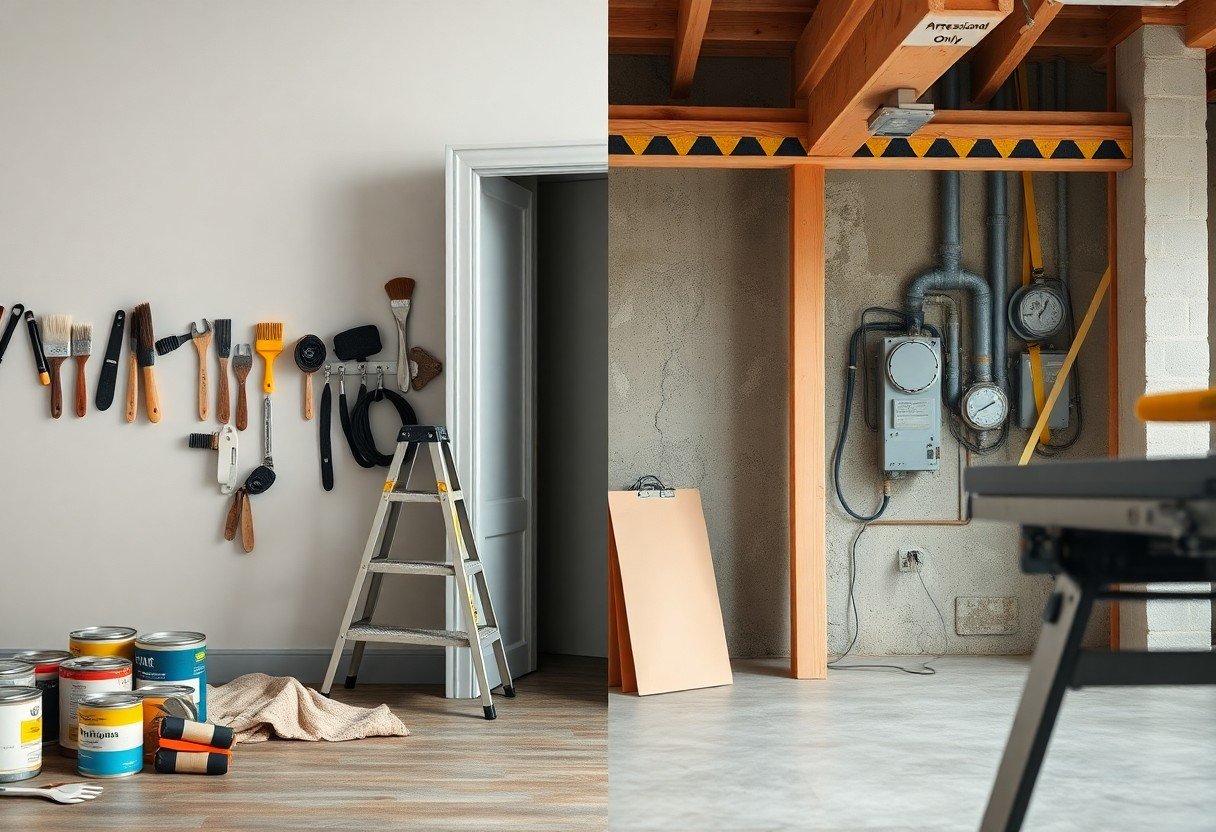
Safety should guide every home project: assess risk, skill, and tools before you begin; tackle painting, simple carpentry, and cosmetic updates yourself, but hire professionals for electrical, gas, major structural, or asbestos-related work to avoid injury and costly mistakes.
Key Takeaways:
- Small cosmetic tasks – painting, wallpapering, simple tiling, yard work, and replacing nonstructural fixtures – are generally safe DIY if you follow instructions and use proper protective gear.
- Electrical work, gas lines, roof repairs, major plumbing, and structural changes should be handled by licensed professionals due to high risk of injury, fire, or costly damage.
- Permits and local building codes often determine whether a job can be done DIY; obtain required permits and inspections to avoid legal and resale issues.
- Evaluate your skills, available time, and the potential cost of fixing mistakes; attempt projects yourself only when savings outweigh the risk and you can deliver reliable results.
- Consult a professional for estimates, safety checks, or partial help when unsure; limited professional input can keep a mainly DIY project safe and code-compliant.
Evaluating Your Skill Level and Resources
Gauge your abilities against project demands: list tasks you’ve completed successfully, note where you needed help, and decide if you can commit time for learning or corrections before proceeding.
Assessing mechanical aptitude and experience
Compare specific skills required-electrical wiring, plumbing, carpentry-to your hands-on history; you should be honest about troubleshooting ability and comfort with power tools before starting.
Inventorying important tools and safety gear
List every tool and PPE the job needs, note missing items, and factor rental or purchase time and cost so you won’t stall mid-project.
Catalog the exact tools and safety gear, assessing condition, fit, and certification; verify batteries, calibration, and spare parts. If you lack a specialized item, plan rentals or professional assistance and include training time to use equipment safely, plus secure storage to protect investments and keep the workspace hazard-free.
Beginner-Friendly Interior Enhancements
You can tackle many beginner interior projects safely by focusing on cosmetic updates, hardware swaps, and simple shelving that improve function without special tools; avoid electrical, gas, or structural work that requires professional skills and permits.
Cosmetic updates: Painting and trim work
Painting and trim work let you refresh rooms quickly; you can achieve professional-looking results with proper prep, the right paint, and quality brushes-test for lead on older surfaces and skip ceilings with hidden damage.
Simple hardware and cabinetry replacements
Replacing cabinet pulls, hinges, or faucets is an easy DIY win you can finish in an afternoon with basic tools; leave complex cabinet realignment or plumbing reroutes to trades to prevent leaks or damage.
If you tackle a full cabinet swap, measure openings, verify countertop and sink clearances, and account for cabinet weight and wall anchors; consider temporary professional help for plumbing connections or countertop adjustments to avoid costly mistakes.
Basic Maintenance and Minor Repairs
You can handle routine tasks like HVAC filter swaps, minor plumbing stops, paint touch-ups, and tightening fixtures to prevent bigger problems; stop and call a professional when projects involve live wiring, gas lines, major structural work, or complex diagnostics.
Routine landscaping and exterior upkeep
Outside, you can mow, prune small shrubs, clean gutters, and paint trim to maintain curb appeal; hire pros for large tree removal, major grading, or any work near electrical lines or complex drainage that requires permits.
Patching drywall and surface restoration
When you patch small holes and sand smooth, careful joint compound application and primer give excellent results; consult a pro if you find extensive water damage, mold, or irregular framing that suggests deeper issues.
Patching small dents and holes requires matching compound, feathering edges, sanding between coats, and priming before paint; you can save time with premixed spackle and a good putty knife, but for mold, repeated failure, or uneven framing, hire a drywall specialist to assess moisture and structural causes.
High-Risk Projects: When to Call an Electrician
Wiring errors can cause fires or electrocution, so you should call an electrician for anything beyond swapping switches or installing simple fixtures.
Hazards of internal wiring and circuit expansion
Inside walls, you can encounter hidden junctions, shared neutrals, or degraded insulation; attempting circuit expansion without training raises fire and shock risk.
Main panel upgrades and local code requirements
Panel upgrades expose you to high fault currents, bonding and grounding complexities, and code-driven changes-hire a licensed pro for service sizing, breaker replacement, or meter work.
Upgrading a main panel often requires a load calculation, proper grounding, correctly sized service conductors, and permits; you should expect inspectors and possible utility coordination, and a licensed electrician will ensure labeling, AFCI/GFCI protections, and compliance with local code to avoid safety hazards and failed inspections.
Complex Systems and Structural Integrity
Complex systems like structural supports, electrical runs, and plumbing networks interact in ways that magnify errors; you should avoid DIY when changes affect multiple systems and consult licensed pros to assess risks and required permits.
Risks of modifying load-bearing structures
Altering load-bearing walls without an engineer’s assessment can destabilize your home, causing sagging, cracks, or collapse; secure stamped calculations, temporary supports, and permits before you remove or cut any structural element.
Specialized HVAC and gas line installations
Gas and HVAC work carries fire, carbon monoxide, and refrigerant risks; you should hire licensed technicians for installations, leak testing, pressure checks, and permit sign-offs to protect your household and property.
When you tackle HVAC or gas projects, require certified techs for refrigerant recovery, appliance venting, and pressure-tested piping; insist on permits, proper clearances, seismic bracing where needed, and post-work CO detection to ensure safe, code-compliant results.
The Financial Impact of DIY Errors
Mistakes on DIY projects can cost you thousands in repairs, reduce home value, or void insurance; consult 7 Home Improvement Projects That You Should Never DIY before tackling high-risk work.
Permitting, inspections, and insurance liability
Permits and inspections protect you; skipping them can trigger fines, mandated demolition, and insurance denials that leave you financially responsible.
Cost-benefit analysis of professional labor
Weigh labor costs against risks; hiring professionals often saves you money by preventing mistakes and preserving warranties.
Calculating true cost requires that you factor in repair likelihood, time spent, tool rentals, permit fees, and resale impact, then compare that total to professional quotes before deciding.
Summing up
Taking this into account, you should tackle simple cosmetic, painting, and minor carpentry projects yourself, but avoid electrical, major plumbing, structural, and gas work without licensed professionals; assess your skills, tools, and local codes before starting to protect safety and finances.
FAQ
Q: Which projects are generally safe for DIY beginners?
A: Small cosmetic tasks such as painting walls, installing trim, swapping cabinet hardware, and laying peel-and-stick backsplash are usually safe for beginners. Basic flooring installations like floating laminate or vinyl plank floors can be tackled with the right instructions and a few simple tools. Simple yard work, raised bed garden construction, and basic deck staining carry low risk when proper safety gear is used. Minor plumbing jobs that do not affect the main supply or waste lines, such as replacing a faucet cartridge or swapping a showerhead, are commonly DIY-friendly. Assembly of flat-pack furniture and basic appliance replace-outs that only require plug-and-play connections are also appropriate for most homeowners.
Q: Which projects should you avoid and hire a professional for?
A: Electrical system work beyond changing a light fixture, including full circuit wiring, panel upgrades, and rewiring, should be handled by a licensed electrician because of shock and fire hazards and code requirements. Gas line work, gas appliance installation, and anything involving natural gas or propane demand a certified technician to prevent leaks and explosions. Structural modifications such as moving load-bearing walls, altering foundations, or major roof repairs require a structural engineer and licensed contractor. Work involving sewer lines, major plumbing inside walls, or buried utilities carries high risk of costly damage and contamination, so hire an experienced plumber or utility contractor. Hazardous-material removal such as asbestos, lead paint, and extensive mold remediation requires trained professionals and proper containment procedures.
Q: How do I decide whether a specific project is safe for me to DIY?
A: Start by checking whether building permits or inspections are required for the job; permit-required work often implies professional standards and legal liability. Compare your skills and toolset to the tasks: list each step, identify required tools, and decide if you can perform each safely and accurately. Evaluate the consequences of a mistake in terms of cost, safety, and time to repair; high-cost or safety-critical outcomes point to hiring a pro. Consult local codes, your homeowners insurance policy, and online resources from reputable trade organizations to verify compliance and best practices. If any part of the project involves electricity, gas, structure, or concealed systems and you lack certified experience, plan to involve a professional.
Q: What precautions reduce risk when attempting DIY projects?
A: Use proper personal protective equipment such as eye protection, gloves, respirators, and knee pads appropriate to the task. Shut off power and water at the source before working on electrical or plumbing systems and use lockout/tagout procedures when possible. Follow manufacturer instructions, verified how-to guides, and code-based references rather than relying solely on quick videos. Test methods on a small or hidden area first and keep a contingency budget and plan in case the job needs professional correction. Keep permits, inspections, and receipts organized to document compliance and to protect resale value and insurance coverage.
Q: When does hiring a professional save money and stress over DIY?
A: Hire a pro when the cost of mistakes, permit violations, or rework exceeds the savings from labor; hidden costs such as tool purchases, disposal fees, and extended timelines can erode DIY savings. Complex systems that affect home safety, like HVAC, electrical panels, and gas appliances, often come with warranties and liability coverage only when installed by licensed contractors. Projects that require specialized permits and inspections are more efficient when a professional manages code compliance and scheduling. Time-constrained homeowners benefit from hiring professionals because skilled crews complete work faster and with predictable results. If your project may affect resale value or insurance coverage, professional documentation and warranty-backed work offer long-term protection.