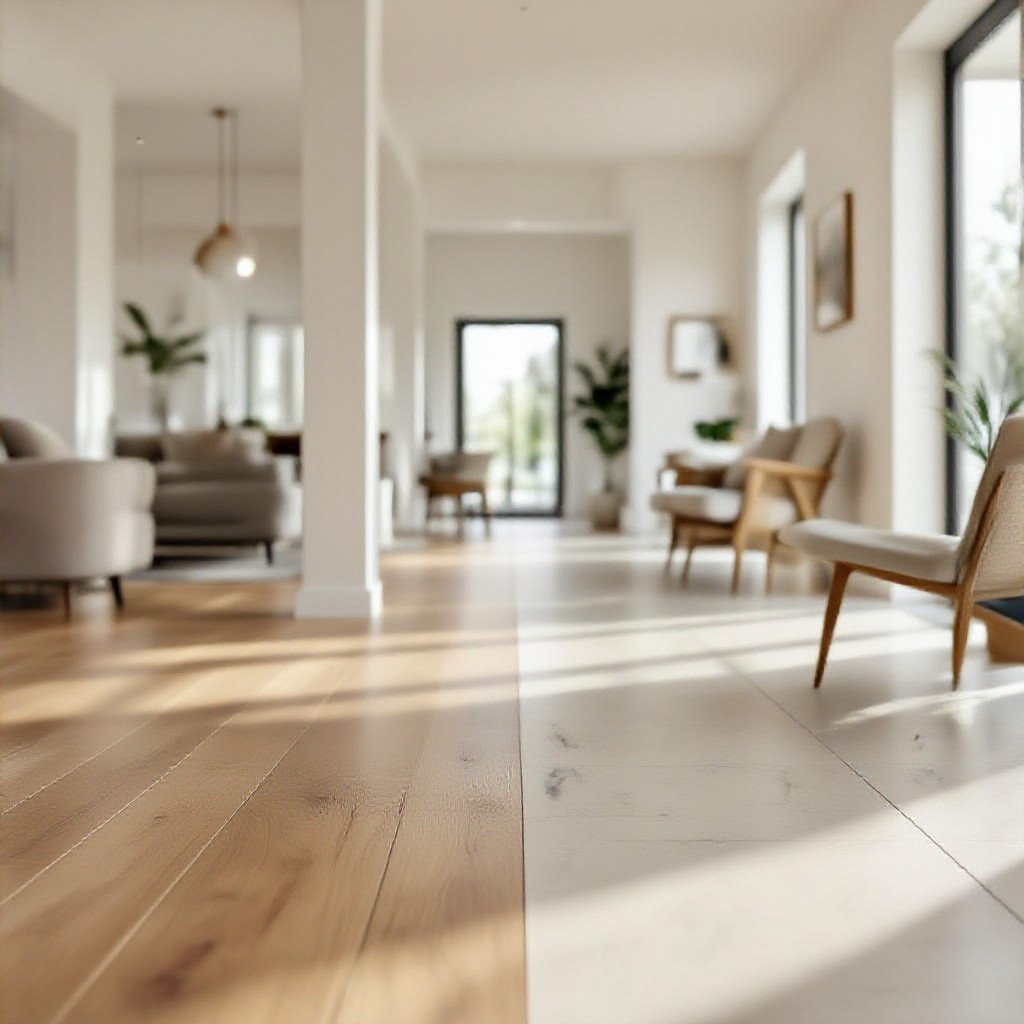
flooring can make or break a sale – would you rather have classic hardwood or bargain vinyl? You should favor hardwood, engineered wood and quality tile; they appeal to most buyers, wear well and command higher offers. Trust the market, not trends.
Key Takeaways:
- Imagine you’re prepping a 3-bed, 2-bath to list next week and the buyer’s first impression is the floors; they set the tone. Hardwood still rules resale. Engineered or solid hardwood in neutral stains attracts the widest buyer pool, can be refinished, and usually delivers the best ROI.
- Want lots of bang for your buck? Luxury vinyl plank (LVP) is a safe choice – waterproof, realistic-looking, low-maintenance, and perfect for kitchens, mudrooms, and basements. Quality laminate can be a cheaper alternative but skip the ultra-cheap stuff that peels or gaps.
- Tile works great where moisture matters – bathrooms and entryways, especially when it’s a neutral, easy-to-clean option. Natural stone can add perceived luxury but it’s expensive and style-specific, so use sparingly.
- Carpet still makes sense in bedrooms for warmth and sound, but avoid carpet in main living areas; buyers often view it as worn or smelly. If you keep carpet, choose low-pile neutral and replace stained sections.
- Consistency and condition matter more than flash – matching flooring across main living spaces and hiring a good installer pays off. Fix major damage or replace cheap, worn surfaces before listing; buyers notice floor problems fast.
The real deal about luxury vinyl plank
Imagine you walk into a staged home and the floors read like hardwood but shrug off spills, pet nails and heavy traffic, that’s luxury vinyl plank. You get convincing wood looks, far less upkeep and real water resistance, which makes it an appealing, practical pick for resale-minded sellers.
Why it’s actually better than wood for some folks
If you have kids, pets or basements that get damp, vinyl often beats wood, offering scratch and water resistance, low maintenance and lower cost. You still get texture and plank variation, so buyers who want an easy life love it.
Don’t let the “fake” label scare you off
Some people shrug at the word “fake” but quality vinyl these days gives convincing grain, hand-sawn looks and realistic finishes, so you’re not necessarily trading character for practicality. Match style and install quality, and most buyers won’t notice the difference.
You might worry that vinyl sounds cheap, but top-tier planks have embossed textures, color depth and beveled edges that fool most buyers. Who wants floors that stain, swell or scream for refinishing in five years? Invest in a good wear layer, pro installation and compatible trim, that combo looks intentional and sells.
What’s the deal with tile in wet areas?
Tile works great in wet areas, so you get durability and low maintenance that buyers like; check community takes: Flooring choices for house resale value : r/Renovations
My take on why kitchens need stone or ceramic
Kitchens sell faster when you pick stone or ceramic – they’re spill-proof, heat-friendly, and buyers see them as long-lasting. You get less upkeep and fewer repair headaches, so pricing holds.
Keeping those grout lines from looking gross
Grout stains fast, so you should seal it, choose darker tones or use epoxy grout and clean regularly; buyers notice crispy, clean lines more than fancy tiles.
You ever want grout to disappear? You can: pick a matching grout color and seal it well. Reapply sealer yearly, or go epoxy and never worry about stains. Scrub with a stiff brush, steam clean when needed, and use pH-neutral cleaners; tidy grout sells.
Is carpet honestly a deal-breaker?
Imagine walking into a living room where the carpet smells a little musty and shows worn paths; buyers notice fast, you’ll feel the vibe drop and offers can stall, while bedrooms often stay defensible as cozy, lower-traffic spots.
Bedrooms are fine, but keep it out of the living room
You can get away with carpet in bedrooms because buyers expect softness and warmth, but in living areas it becomes a liability when stains or wear show up and negotiations start to drag.
Picking a neutral vibe that won’t annoy buyers
Choose low-maintenance colors and textures you’d live with, like greige, warm oak tones or stone-look tile, since those make rooms feel move-in ready for most buyers.
If you want buyers to focus on space instead of flooring, stick to tones that hide dirt and coordinate with common cabinet and wall colors. Mix textures like wide-plank vinyl, wood-look tile, or matte-finish hardwood to add interest without bold color. Get samples and view them in morning and evening light so you see undertones, and keep trim simple so buyers can picture their stuff.
How much cash will you actually get back?
You’ll usually recoup more by choosing popular, practical flooring over flashy splurges. Local demand and your home’s price bracket steer payback rates, so pick options that match neighborhood expectations if you actually want cash back at closing.
Calculating your ROI before you rip things up
Estimate the resale bump by comparing material and install costs to local comps; factor labor and realistic recovery percentages, then ask yourself: will this upgrade actually increase your net proceeds or just make you feel better about the space?
Avoiding the “over-renovation” trap
Don’t gut everything chasing top-dollar; buyers usually want sensible, durable choices that match the neighborhood, not bespoke finishes that narrow your pool. Keep it neutral and practical unless your market demands extravagance.
When you go too fancy, most buyers see a mismatch and you won’t get back the premium you paid. Why spend big on quirky patterns or ultra-luxe materials if buyers in your area favor clean, classic looks? Scale projects to the home’s value.
Neutral hardwood or quality vinyl plank wins more buyers.
Here’s what’s actually trending right now
Compared to old carpet, natural wood and luxury vinyl are stealing the spotlight; you want floors that look high-end, photograph nicely, and hold up to traffic. Buyers notice realistic finishes, so pick durable, low-maintenance options that let you ask more at sale time.
Why wide planks are winning the game
Unlike narrow boards, wide planks make rooms feel larger and more contemporary, and you’ll sell that spacious vibe. They show fewer seams, photograph cleaner, and suit diverse styles, so you get broader buyer appeal without chasing fads.
The colors that make a house feel like home
Rather than stark white, warm neutrals and soft greiges make buyers linger – don’t underestimate the pull of cozy hues. You’ll mask wear, match lots of decor, and help buyers imagine themselves living there.
Against loud palettes, warm neutrals and greiges photograph better and let buyers imagine their stuff, so you’ll get more second looks.
Warm neutrals win.
Want buyers to relax or feel energized? You can use soft blues or sage as accents, add white trim for crisp contrast, and keep stains consistent across rooms; that kind of cohesion makes a huge difference when buyers scroll photos late at night, you’ll thank me later.
Final Words
Upon reflecting, you should favor hardwood or high-quality engineered wood for top resale value; use ceramic or porcelain tile in bathrooms, and choose luxury vinyl plank for budget-friendly durability – buyers like classic wood, easy upkeep, and moisture-smart options, so pick what fits your market.
FAQ
Q: Which flooring adds the most resale value?
A: Hardwood wins for resale value, hands down. Buyers still love the look and feel of real wood – it signals quality and is easy to imagine in any style of home. Solid hardwood in main living areas and refinished floors on older homes can often recoup a large portion of their cost at sale; engineered hardwood gives the same look with more moisture tolerance.
Real hardwood sells.
Choose neutral stains and wider planks for broad appeal, and avoid overly dark or trendy colors that date fast. If the floors are worn, consider refinishing instead of replacing – it’s cheaper and buyers notice the upgrade.
Q: Is engineered hardwood or laminate a good alternative?
A: Engineered hardwood is a smart compromise – it looks like solid wood, handles humidity better, and can be more stable over time. Laminate has come a long way and can mimic wood at a fraction of the cost, but the cheap stuff wears out fast and sounds hollow underfoot. Want durability for a busy household? Pick high-quality engineered or premium laminate with a thick wear layer and a solid locking system.
Q: How does luxury vinyl plank (LVP) affect resale?
A: LVP is a star for kitchens, mudrooms and rentals because it’s waterproof and tough – spills and pets don’t faze it. Many buyers appreciate the practical benefits, especially when it’s well installed and looks realistic; in mid-range homes it often boosts perceived value. High-quality LVP can be a big selling point in markets where buyers prize low maintenance, though it usually won’t command the same premium as hardwood in high-end neighborhoods.
Q: Which flooring choices should sellers avoid?
A: Carpet in main living areas can turn buyers off, especially if it’s stained, worn, or a bold color. Extremely low-grade laminate and thin vinyl show wear quickly and give a cheap feel that drags value down. Busy patterned tile, shag or dated fittings that interrupt flow often lower appeal. If you can’t replace everything, pick neutral fixes – replace stained carpet or install LVP in problem spots to make the home feel move-in ready.
Q: How should I choose flooring to match my home’s market and budget?
A: Match the finish to the neighborhood and price point – buyers expect certain materials based on comparable homes. Use hardwood or quality engineered on the main level, tile in baths and laundry, and LVP where waterproofing and budget matter. Keep colors neutral and run the same flooring through main living spaces so rooms flow; buyers notice cohesion. Small, inexpensive upgrades like new thresholds, fresh baseboards, and professional installation make the whole job look intentional and add buyer confidence.