
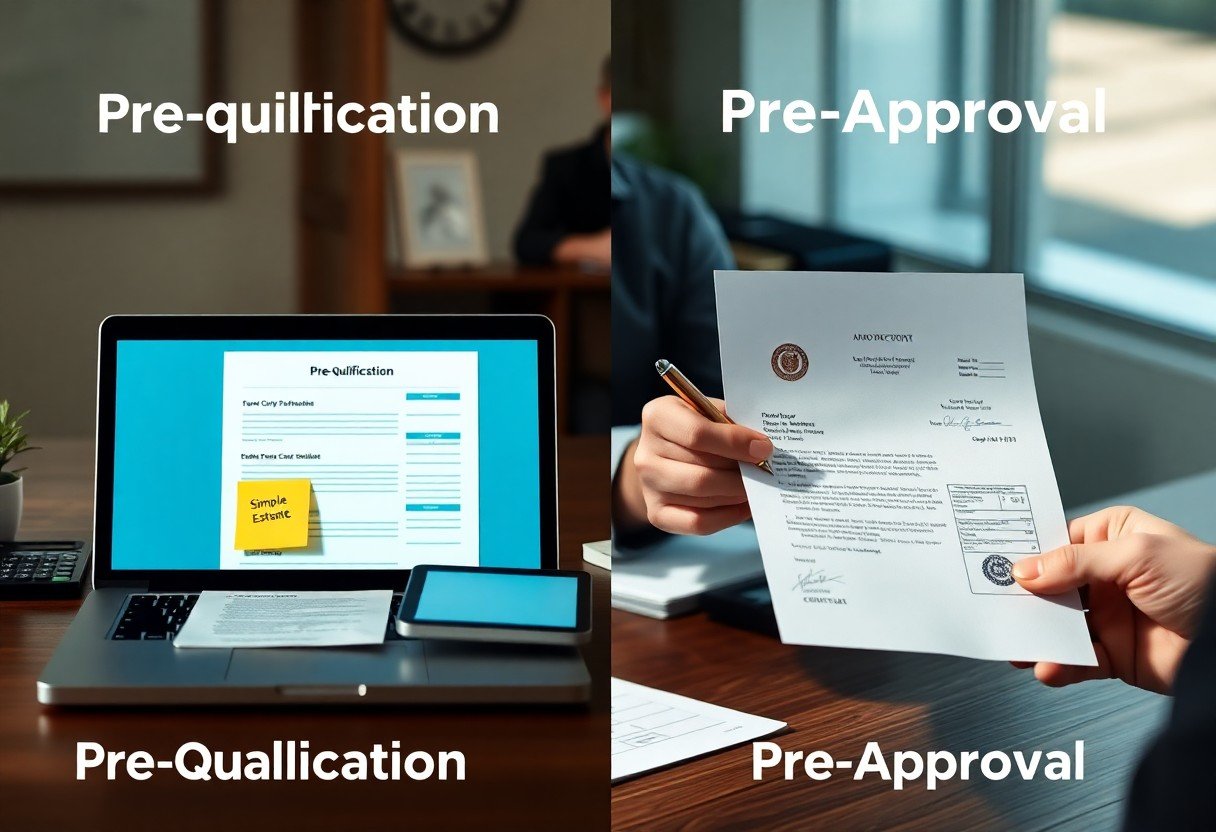
It’s a concise guide explaining how pre-approval-lender-verified conditional credit commitment-differs from pre-qualification, an informal estimate based on self-reported data, so you understand what lenders require and how to strengthen your offer.
Key Takeaways:
- Pre-qualification provides a quick estimate based on self-reported income, assets, and debts; pre-approval requires documented verification and a credit check.
- Pre-qualification is non-binding and informal; pre-approval is a conditional lender commitment that carries more weight with sellers.
- Pre-approval identifies a specific loan amount and potential interest rate range; pre-qualification gives a general affordability range only.
- Pre-approval typically requires pay stubs, bank statements, tax returns, and employment verification; pre-qualification often does not pull credit or request documents.
- Both are preliminary steps; final loan approval still requires underwriting, appraisal, and may change before closing.
Defining Pre-Qualification: The Preliminary Estimate
Pre-qualification gives you a quick, preliminary estimate of how much you might borrow based on basic income, assets, and debts you provide to a lender.
Reliance on Self-Reported Financial Data
Lenders rely on the financial details you self-report, so the estimated loan amount can be optimistic until documentation is verified during underwriting.
Minimal Impact on Credit Scores
Soft inquiries during pre-qualification generally don’t affect your credit score, allowing you to shop and compare rates without risk of point drops.
Credit bureaus and scoring models flag hard inquiries only when you authorize finalized loan applications; unless you give written permission, you’ll typically see only a soft inquiry from pre-qualification that lenders use to gauge eligibility without changing your score.
Defining Pre-Approval: The Formal Commitment
Pre-approval gives you a formal loan commitment after a lender verifies your income, assets and credit, offering stronger negotiating power; compare with pre-qualification here: Prequalified vs. Preapproved: What’s the Difference?
Rigorous Verification of Income and Assets
Your lender will request pay stubs, tax returns and bank statements to confirm income and assets so the pre-approval reflects verified figures rather than rough estimates.
The Role of the Hard Credit Inquiry
You should expect a hard credit inquiry during pre-approval, which posts to your credit file and can slightly lower your score for a short period.
Checking your credit report before applying lets you correct errors and understand current scores, and multiple mortgage inquiries within a focused time frame are usually grouped to limit impact while you compare offers.
Key Differences in Documentation Requirements
Lenders require more documentation for pre-approval than pre-qualification, so you should expect income, assets, and ID verification when seeking a verified status.
Speed of Issuance vs. Depth of Analysis
Timing favors pre-qualification because you get a quick estimate; pre-approval takes longer as lenders review tax returns and pay stubs, which gives you a firmer borrowing picture.
Necessary Paperwork for a Verified Status
Documentation for verified status includes pay stubs, W-2s, bank statements, tax returns, and ID; you will also need authorization for a credit check.
Expect to provide two years of tax returns, recent pay stubs, bank statements covering 30-60 days, proof of assets, and government ID; self-employed applicants should include profit-and-loss statements and 1099s, and you may be asked to explain large deposits or gaps in income.
Market Advantages: Why Pre-Approval Carries More Weight
Pre-approval signals to sellers and agents that you have lender backing and a clear borrowing limit, making your offer more compelling in busy markets and reducing the chance of delays or financing-related fall-throughs.
Strengthening Your Offer in Competitive Markets
Including a pre-approval letter with your offer shows sellers you’re financed and serious, allowing you to propose shorter inspection periods, higher earnest money, or cleaner contingencies to beat competing bids.
Signaling Buyer Credibility to Real Estate Agents
Agents often prioritize buyers with pre-approval because it reduces uncertainty and shortens timelines, so you appear more reliable and receive better showings and representation.
Trust from agents translates into better access to listings, faster updates, and more aggressive negotiation on your behalf; you should present documentation like pre-approval, proof of funds, and clear communication to earn that confidence.
Strategic Timing in the Home Buying Process
Timing shapes how quickly you can close and how competitive your offer looks; get pre-qualification early to set realistic budgets, and seek pre-approval when you’re ready to submit offers so sellers see you’re serious.
When to Use Pre-Qualification for Budgeting
Use pre-qualification early to estimate what you can afford, narrow your search, and set realistic monthly payment expectations before you pursue formal underwriting.
The Ideal Window for Securing a Pre-Approval Letter
Aim to secure pre-approval once your credit and documents are in order and you expect to make offers within 30-90 days so the letter stays current.
Before you apply, gather pay stubs, tax returns, bank statements, and ID so lenders can verify income and assets promptly. Pre-approval letters usually expire in 60-90 days, and changes to employment or credit can require requalification. With a current letter you present stronger offers, reduce seller concerns, and shorten underwriting delays when a contract is accepted.
Final Words
Now you understand that pre-qualification gives an initial estimate based on your self-reported finances, while pre-approval involves verified income and a hard credit check, offering a conditional loan commitment; pursue pre-approval when you want a stronger offer and clearer budget.