Over time your HVAC loses efficiency and repair costs rise; you should upgrade when frequent breakdowns, soaring energy bills, or inadequate comfort indicate replacement will save money and improve performance.
Key Takeaways:
- A system older than 10-15 years or using phased-out refrigerants warrants replacement.
- Frequent repairs that total more than about half the cost of a new system make replacement more economical.
- Energy bills that rise despite maintenance indicate a newer high-efficiency unit will pay back through lower utility costs.
- Persistent comfort problems-uneven temperatures, excess humidity, or poor indoor air quality-mean upgrading equipment or ducts can substantially improve comfort and health.
- Available rebates, tax credits, or favorable financing can make an upgrade financially attractive even when performance gains are moderate.
Assessing System Age and Repair Frequency
Age drives most replacement decisions; when your HVAC reaches 10-15 years and repair visits increase, you should compare cumulative repair costs, declining efficiency, and part availability against replacement benefits to decide what saves you money and hassle long term.
The 15-Year Benchmark for HVAC Performance
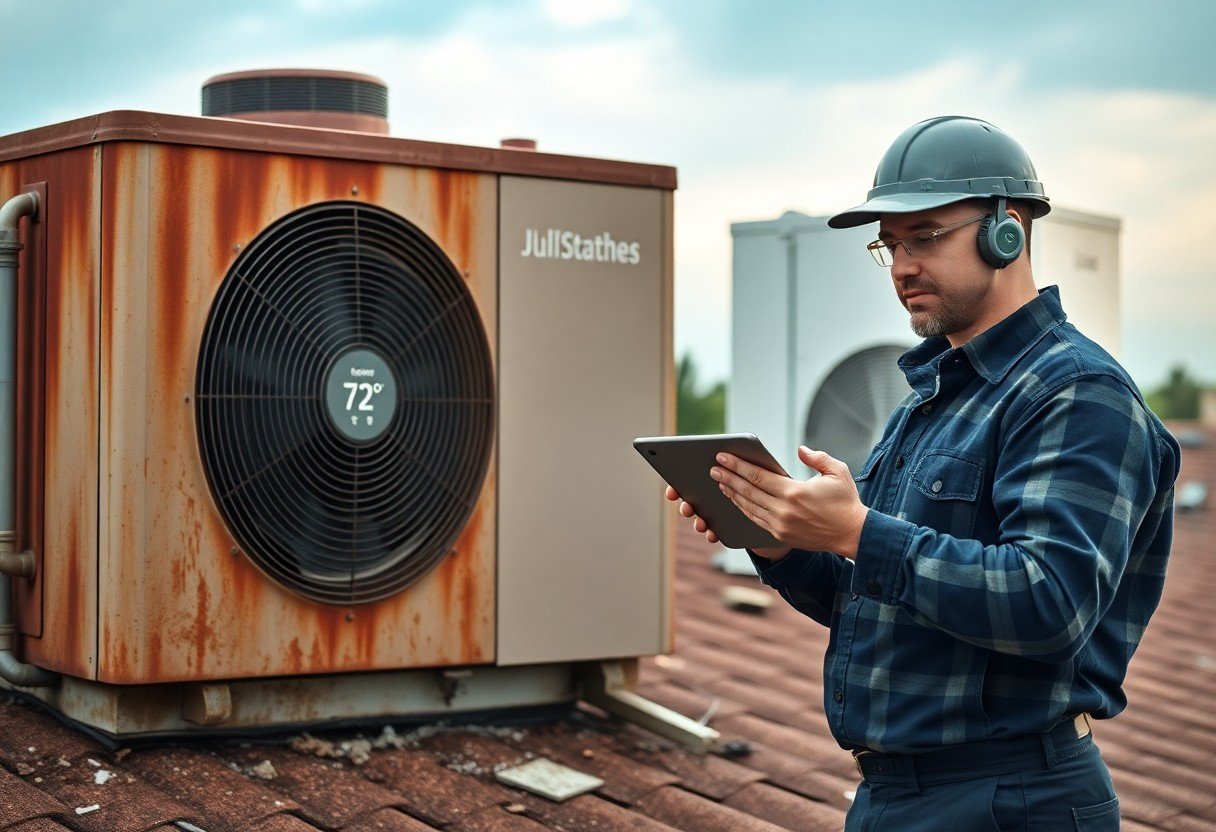
At the 15-year mark, you should expect lower efficiency and more frequent failures, so factor in higher energy bills, scarce parts, and shorter remaining life when deciding whether replacing your system makes financial sense.
Applying the 50% Rule to Repair Estimates
When a single repair estimate nears 50% of a new system’s installed cost, you should lean toward replacement, since repeated repairs can quickly exceed that investment while newer units cut energy use and maintenance needs.
Consider the 50% rule a practical guideline rather than a hard law. You should total the quoted repair cost and compare it to the full installed price of a replacement, including labor, ductwork, permits, and any necessary upgrades. Get multiple estimates and factor in expected remaining life, annual energy savings, warranty length, and available rebates. If repairs are recurring or expected future fixes push cumulative costs near replacement, choosing a new, more efficient system often lowers your lifetime expense and reduces unexpected downtime.
Evaluating Energy Efficiency and Utility Impact
Assessing your home’s energy use and how an upgraded system affects bills helps decide if replacement is worth it. You should measure seasonal consumption, local utility rates, and how often the system runs to estimate payback and carbon reductions.
Understanding SEER2 and AFUE Rating Advancements
SEER2 and AFUE improvements mean you pay less per cooling or heating hour; you should compare new ratings to your current unit to estimate annual savings and likely rebate eligibility.
Analyzing Patterns in Monthly Operational Costs
Track monthly bills and runtime hours to spot spikes, seasonal trends, or rising baseline usage that signal inefficiency or failing components; you can then model savings from a new system.
Compare billed energy over at least a year, adjusting for temperature and occupancy, and plot monthly kWh or therms so you see load shifts. You should analyze peak charges, rate tiers, and off-peak usage, and inspect runtime logs or smart-thermostat reports for excessive cycling. Use this data to calculate realistic payback periods for upgrades based on expected efficiency gains and local incentives.
When Is an HVAC Upgrade Worth It?
You should weigh comfort gains and cleaner air when deciding on an upgrade; improved humidity control and filtration reduce allergies and odors-see Signs It’s Time for a New HVAC System: When to Upgrade for clear indicators.
Advancements in Humidity Control and Filtration
Upgraded systems let you maintain ideal humidity and use higher-grade filters so you breathe fewer particulates and mold spores, improving sleep and daily comfort throughout your home.
Solving Inconsistent Temperatures with Variable-Speed Technology
Variable-speed systems modulate output so you experience steadier temperatures, reduced noise, and improved efficiency versus single-stage units, cutting hot and cold spots room by room.
Comfort & IAQ Details
| Consideration | Benefit to You |
|---|---|
| Humidity control | Less mold growth; more comfortable indoor air |
| Filtration upgrades | Fewer allergens and dust for healthier breathing |
| Even airflow | More consistent room-to-room temperatures |
Systems with variable-speed blowers modulate airflow continuously, so you get fewer hot or cold spots, reduced cycling, and steadier comfort while lowering short-term energy spikes.
Variable-Speed Benefits
| Feature | Benefit to You |
|---|---|
| Modulating output | Fewer hot/cold zones for consistent comfort |
| Reduced cycling | Lower energy spikes and quieter operation |
| Precise control | Smoother temperature holds without overshoot |
Financial Incentives and Return on Investment
Calculating available rebates, tax credits, and expected energy savings helps you determine whether an HVAC upgrade pays back within your planning horizon; include maintenance and efficiency gains to get an accurate return-on-investment estimate.
Leveraging Federal Tax Credits and Local Rebates
Explore federal tax credits and local rebates you qualify for, as they can lower upfront costs and shorten your payback period; verify eligibility and documentation requirements before purchase.
Long-term Savings vs. Upfront Capital Expenditure
Weigh energy bill reductions against initial equipment and installation costs to decide if long-term savings justify an upgrade, factoring in your system’s lifespan and expected efficiency.
Estimate your break-even point by modeling annual energy savings, maintenance cost reductions, and potential utility rate increases; include discount rates to compare net present value so you can prioritize upgrades that return value within your ownership timeframe.
Environmental Impact and Modern Refrigerants
You should factor refrigerant type and global warming potential when considering an HVAC upgrade; modern refrigerants and improved system designs reduce leaks, ozone harm, and long-term environmental costs while boosting efficiency.
The Phase-out of R-22 and Future-Proofing Your Home
R-22 is being phased out, so you will face rising repair costs and shrinking availability; replacing R-22 systems now helps you avoid expensive retrofits and ensures compatibility with current, lower-impact refrigerants.
Reducing Carbon Footprint through High-Efficiency Units
High-efficiency units cut your electricity use and lower greenhouse gas emissions, so choosing models with higher SEER ratings directly reduces your household carbon footprint and monthly bills.
Choosing high-efficiency equipment paired with proper sizing and routine maintenance maximizes emissions reductions and system longevity. Pairing upgrades with smart thermostats, improved insulation, and sealed ductwork further lowers energy demand. Incentives, tax credits, and utility rebates often offset upfront costs and accelerate your payback, making greener HVAC choices more affordable for you.
Strategic Timing for Replacement
Planning your replacement during shoulder seasons often trims costs and avoids contractor backups, so you can schedule detailed inspections, secure preferred installation dates, and minimize seasonal discomfort.
Benefits of Off-Season Installation
Off-season installations tend to come with lower labor rates and faster booking, letting you complete upgrades with less disruption and often better parts availability.
Avoiding the Risks of Emergency System Failure
Unexpected failures force you into premium emergency service fees, shorten equipment lifespan, and can create comfort or safety problems that are harder to fix quickly.
Replacing worn components ahead of failure lets you compare bids, align warranties, and plan work during convenient times, reducing the chance of secondary damage like water intrusion or mold while keeping your costs more predictable.
Conclusion
As a reminder you should upgrade your HVAC when repairs outstrip replacement cost, efficiency gains will lower bills, comfort and indoor air quality suffer, or your system is ten to fifteen years old; consult a qualified technician to quantify savings and select the right replacement for your home’s size and climate.
FAQ
Q: What common signs indicate an HVAC upgrade is worth considering?
A: Common signs include frequent breakdowns, repair bills that add up quickly, and a unit age of 10-15+ years. Rising energy bills without a change in usage patterns suggest falling efficiency. Inconsistent temperatures or poor humidity control across rooms point to capacity or zoning issues. Difficulty sourcing refrigerant (for older R‑22 systems) or noisy operation can also justify replacement.
Q: How do I evaluate whether upgrade costs will pay off through energy savings?
A: Start by comparing the current system’s SEER/HSPF ratings to those of modern units and estimate annual energy savings using local electricity or fuel rates. Calculate simple payback: (upgrade cost − rebates)/annual energy savings. Factor in expected remaining life of the old unit, warranty differences, and maintenance savings. Use utility bill history and installer estimates for realistic numbers.
Q: When is it better to repair an HVAC system instead of replacing it?
A: Repair is often better if the system is under 10 years old and the repair cost is a small fraction of replacement cost (commonly under 30%). Systems that have been well maintained and show no recurring failures can be cost-effectively repaired. Replace when the unit is older than 12-15 years, repairs exceed roughly 50% of replacement cost, or efficiency and refrigerant availability are poor.
Q: What incentives or financial options can make an HVAC upgrade more affordable?
A: Utility rebates, state or local energy-efficiency programs, and federal tax credits for high-efficiency equipment or qualifying heat pumps can reduce upfront cost. Manufacturer promotions, contractor financing, and low-interest loan programs are common. Check with your utility and a licensed installer for specific rebates and eligibility before committing.
Q: What non-energy benefits should I weigh when deciding to upgrade?
A: Upgraded systems improve indoor comfort through better temperature consistency, humidity control, and quieter operation. Modern air filtration and ventilation options can improve indoor air quality. New equipment often requires less maintenance and comes with stronger warranties. Smart thermostats and zoning capabilities provide better control and can increase home resale value.