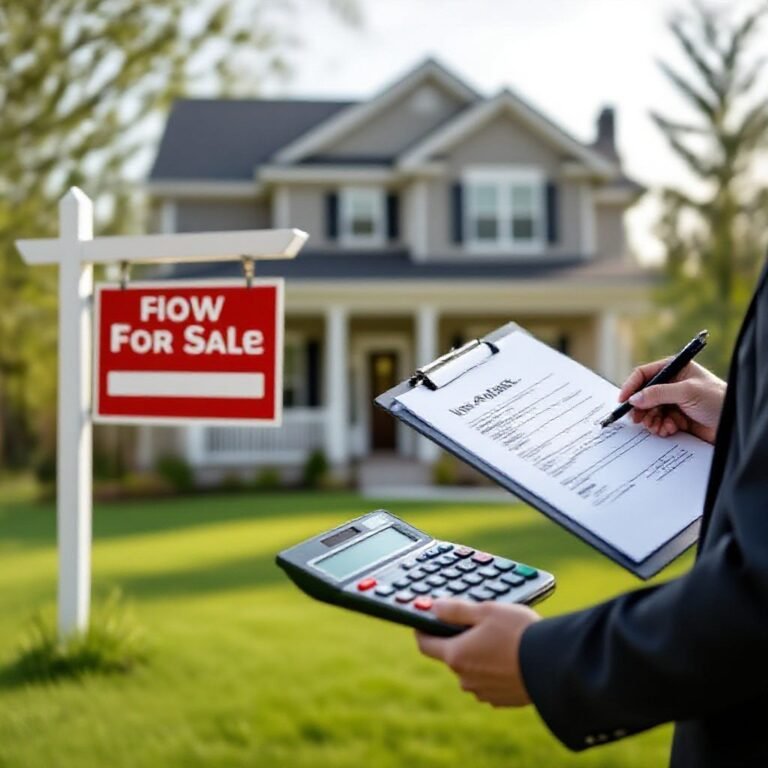

There’s a clear method to determine how much house you can afford: calculate your income, debts, down payment, interest rate, and monthly budget so you can establish a realistic price range and mortgage plan.
Key Takeaways:
- Use the 28/36 rule as a starting point: target housing costs (principal, interest, taxes, insurance) under 28% of gross income and total debt under 36%.
- Include upfront and ongoing expenses when calculating affordability: down payment, closing costs, property taxes, insurance, maintenance, utilities, and HOA fees.
- Account for interest-rate risk by recalculating payments at higher rates to ensure you can still afford the mortgage if rates rise.
- Keep liquid savings for emergencies and avoid borrowing to the maximum limit to preserve flexibility for lifestyle and unexpected costs.
- Get mortgage preapproval, compare loan types and terms, and factor in fees to choose a monthly payment and home price that match your long-term goals.
Evaluating Your Debt-to-Income Ratio
Calculate your debt-to-income ratio by dividing monthly debt payments by gross monthly income; lenders use it to judge how much mortgage you can handle, so you should aim for a lower DTI to improve approval odds and interest rates.
Understanding the 28/36 Rule
Know that the 28/36 rule suggests you spend no more than 28% of gross income on housing and 36% on total debt, helping you estimate an affordable mortgage quickly.
Calculating Front-End vs. Back-End Ratios
Compare your front-end ratio (housing costs divided by gross income) with your back-end ratio (all debt payments divided by gross income) to see lender thresholds and where you need to cut obligations.
Adjust calculations to include property taxes, insurance and HOA fees in your front-end housing costs, and count minimum payments on credit cards, student loans and alimony in your back-end total so you get a realistic DTI lenders will use.
How Much House Can You Actually Afford?
Homeownership costs extend beyond your mortgage: you must budget for taxes, insurance, maintenance and occasional repairs that shift your monthly and annual spending.
Property Taxes and Homeowners Insurance
Taxes and insurance can add hundreds each month; check local rates and shop policies so you know the annual hit to your budget and down payment calculations.
Maintenance Reserves and HOA Fees
Maintenance reserves and HOA dues require you to set aside roughly 1-3% of home value annually and to factor HOA rules or special assessments into your affordability math.
Plan for irregular but costly items-roof, HVAC, and major systems-by keeping a dedicated repair fund, reviewing HOA reserve studies, and asking sellers about recent big repairs so you won’t face sudden special assessments.
Impact of Credit Scores on Borrowing Power
Credit scores determine the interest rates and loan options available to you; higher scores lower monthly payments and expand lender choices, while lower scores force higher rates, larger down payments, or stricter terms.
How Interest Rates Dictate Monthly Affordability
Interest rates directly change your monthly payment: a small rate increase can add hundreds to your mortgage cost, shrinking the price range you can comfortably afford and affecting qualifying debt-to-income calculations.
Strategies for Improving Your Loan Terms
Improve your loan terms by reducing debt, correcting credit-report errors, and saving for a larger down payment to secure lower rates and better offers from lenders.
You should prioritize lowering credit utilization, paying down high-interest balances, and disputing inaccuracies on your reports. Shop multiple lenders, request written rate quotes, and ask how points or closing-cost credits alter your long-term payments. Build savings for reserves and a larger down payment before stretching to the top of your budget to reduce risk and improve offers.
Determining Your Optimal Down Payment
Down payments shape your initial equity and monthly cost; aim for an amount that lowers your rate and avoids PMI without draining emergency savings or sidelining other financial goals.
Balancing Cash Liquidity and Equity
You should preserve several months of expenses while increasing your down payment enough to reduce payments and interest; weigh near-term liquidity needs against long-term savings from lower borrowing costs.
The Long-Term Cost of Private Mortgage Insurance (PMI)
Higher loan-to-value ratios trigger PMI, adding a monthly premium that can persist until you reach 20% equity; include those ongoing costs when calculating what you can truly afford.
Calculating PMI costs requires checking the insurer’s rate-typically about 0.3%-1.5% of the loan annually depending on your credit and down payment; convert that to monthly payments by dividing by 12, and plan for the expense until you reach roughly 20%-22% equity, refinance, or request cancellation once your lender’s LTV threshold is met.

Selecting the Right Mortgage Product
Selecting the right mortgage shapes your monthly budget and long-term savings; compare rates, fees, and flexibility, then test scenarios with the Mortgage Affordability Calculator to see what you can realistically afford.
Mortgage Product Snapshot
| Feature | What it means for you |
|---|---|
| Interest rate | Directly affects monthly payment and total cost |
| Fees & points | Upfront costs that can lower or raise long-term expense |
| Loan flexibility | Refinance and prepayment options impact future choices |
Fixed-Rate vs. Adjustable-Rate Implications
Understanding whether a fixed or adjustable rate fits you depends on how long you plan to stay and your tolerance for payment swings; fixed gives predictability, adjustable often starts lower but can increase over time.
Rate Type Comparison
| Fixed-Rate | Adjustable-Rate |
|---|---|
| Stable monthly payment for the loan term | Lower initial payment, potential future increases |
| Better if you value certainty | Better if you expect to sell or refinance soon |
Comparing 15-Year and 30-Year Loan Terms
Choosing a 15-year loan cuts years and interest but raises monthly payments, while a 30-year lowers payments but costs more interest overall; match the term to your cash flow and goals.
Evaluate your cash flow: a 15-year builds equity faster and saves interest if you can afford higher payments, while a 30-year frees monthly cash for other priorities; run scenarios to quantify the trade-offs for your budget.
15 vs 30 at a glance
| 15-Year | 30-Year |
|---|---|
| Higher monthly payments, much less total interest | Lower monthly payments, more interest over time |
| Good if you want to pay off faster and can afford payments | Good if you need monthly flexibility or invest extra cash elsewhere |

Navigating the Pre-Approval Process
You get pre-approved to lock in a clear budget and prove seriousness to sellers; the lender estimates loan amounts, likely rates, and required down payment so you can focus on homes you can afford.
Verification of Assets and Income
Lenders verify your pay stubs, bank statements, tax returns, and employment; you should provide recent documents and explain any large deposits to avoid delays.
Establishing a Realistic Maximum Purchase Price
Calculate a maximum purchase price using your pre-approval, monthly budget, and anticipated maintenance and taxes so you won’t overstretch and can handle unexpected costs.
Factor in down payment size, loan term, insurance, HOA fees, and potential rate increases when setting your top price so you maintain comfortable monthly payments and room for savings.

To wrap up
Summing up, you can afford a home that keeps monthly housing costs-mortgage, taxes, insurance, maintenance-around 28-36% of your gross income; include down payment, emergency savings, and future goals before you commit.
FAQ
Q: How do I calculate how much house I can afford?
A: Start by calculating your debt-to-income ratios. Lenders look at the front-end ratio (housing costs divided by gross income) and the back-end ratio (all debt payments divided by gross income). Common guideline is 28% for housing and 36% for total debts, but actual limits vary by lender and loan program. Include principal, interest, property taxes, homeowners insurance, HOA fees, and private mortgage insurance when estimating monthly housing costs. Factor in current mortgage rates and expected taxes to produce realistic monthly payments, and use online affordability calculators plus a lender pre-approval to convert estimates into concrete loan limits.
Q: What income and debt figures do lenders use?
A: Lenders typically use gross monthly income as the primary figure. Salary, overtime, bonuses, and documented self-employment income can count if stability and documentation meet lender rules. Monthly debts that count include minimum credit card payments, student loans, auto loans, personal loans, alimony, and child support. Debt-to-income limits vary by program and credit score and often fall between roughly 36% and 50% for qualification. Higher credit scores and larger down payments can increase the amount you qualify for.
Q: How do down payment and interest rate affect affordability?
A: Down payment reduces the loan amount and can eliminate private mortgage insurance once you reach about 20% equity. Lower interest rates reduce monthly payments and allow you to afford a higher purchase price for the same payment. Small changes in interest rate can cut or add tens of thousands in purchasing power, so run scenarios at multiple rates. Loan term also affects monthly cost: a 15-year mortgage raises monthly payments but lowers lifetime interest compared with a 30-year loan.
Q: What other monthly and upfront costs should I budget for?
A: Upfront costs include the down payment and closing costs, which commonly run 2% to 5% of the purchase price. Monthly costs beyond the mortgage principal and interest include property taxes, homeowners insurance, mortgage insurance (if applicable), HOA dues, utilities, and routine maintenance. Plan for maintenance by setting aside roughly 1% of the home’s value each year or adjusting that based on home age and local conditions. Lenders may require reserves equal to a few months of payments for qualification.
Q: How should I prepare for future changes and protect affordability?
A: Keep an emergency fund covering 3 to 6 months of living expenses so mortgage payments remain manageable during income shocks. Avoid borrowing up to the absolute maximum; leaving a buffer in your budget reduces risk if rates rise or expenses increase. Consider a fixed-rate mortgage to lock monthly payments, or increase your down payment to lower payment sensitivity to rate moves. Get pre-approved and stress-test scenarios for job loss, family growth, tax changes, and interest rate increases before finalizing a purchase.