
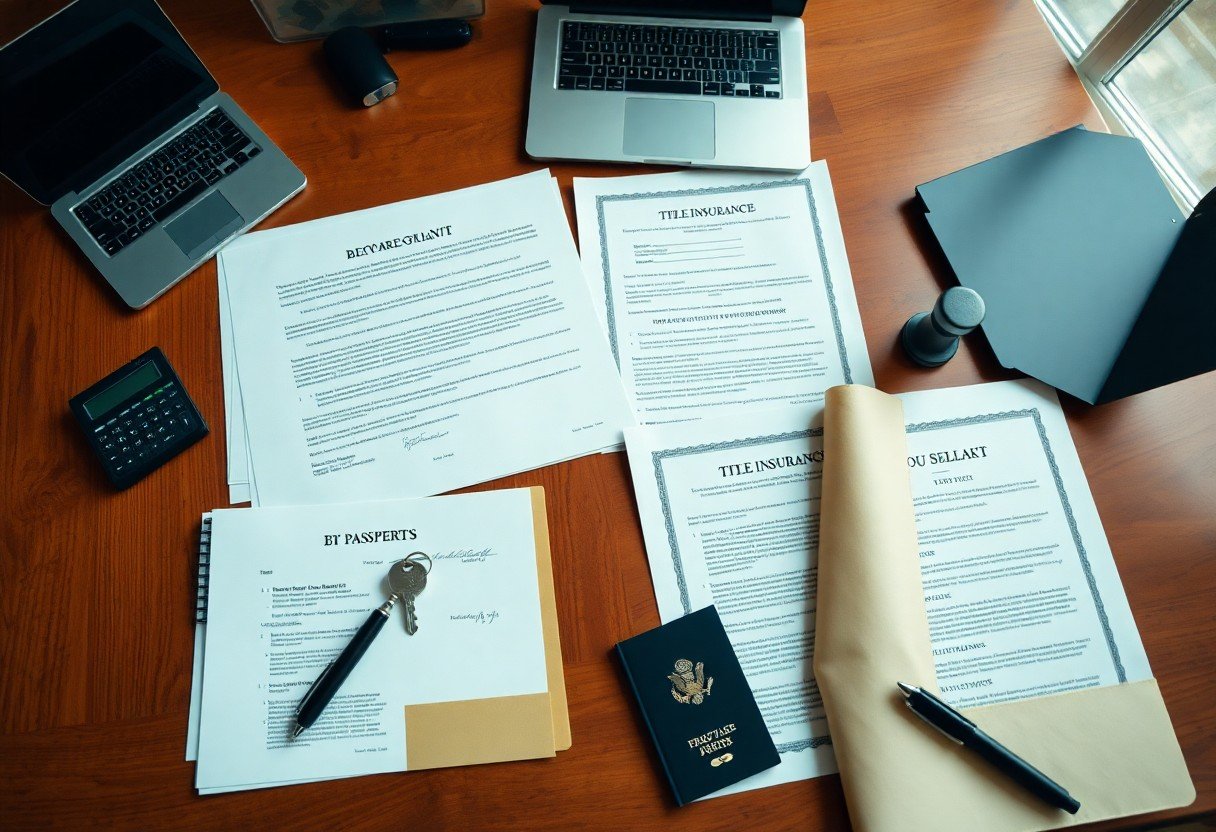
Requirements You will need government ID, proof of income and employment, recent pay stubs, tax returns, bank statements, credit report, pre-approval letter, and property and title documents; collect these items to support your mortgage application and close the sale efficiently.
Key Takeaways:
- A mortgage pre-approval letter shows how much you can borrow and strengthens your offer.
- Proof of income such as recent pay stubs, W-2s, and two years of tax returns is required by lenders.
- Bank statements and asset records demonstrate funds for the down payment and closing costs.
- Government-issued ID, Social Security number, and employer contact information verify identity and employment.
- Transaction documents including the purchase contract, seller disclosures, appraisal, title insurance, and homeowners insurance finalize the closing file.
Proof of Identity and Legal Residency
Lenders require proof of your identity and legal residency before approving a mortgage; bring government IDs, immigration documents, and recent address verification such as utility bills or lease agreements.
Government-Issued Photo Identification
You should present a current government-issued photo ID-driver’s license or passport-to verify identity; lenders may reject expired or photocopied IDs and will compare name and photo to loan paperwork.
Social Security Verification and Citizenship Status
Provide your Social Security card and number, plus documentation of citizenship or lawful presence such as a birth certificate, naturalization papers, permanent resident card, or valid visa.
When lenders verify your Social Security number they match it to credit reports, income records, and identity databases; if you’re a non-citizen expect to provide your I-94, employment authorization, visa details, and any previous name-change documents to confirm eligibility.
Verification of Income and Employment History
Verification of your income and employment history requires recent pay stubs, W-2s, tax returns, and employer contact details; providing accurate documentation speeds approval and avoids last-minute requests.
Standard Employee Documentation: W-2s and Pay Stubs
Provide your last two years of W-2s and the most recent pay stubs, plus a year-to-date summary; lenders use these to verify stable earnings and employment.
Self-Employment Records and Tax Returns
Submit two years of your personal and business tax returns, including Schedule C or K-1s, plus profit-and-loss statements and business bank statements to demonstrate consistent income.
Organize your filings by labeling income sources, reconciling personal and business accounts, and preparing a concise profit-and-loss summary so underwriters can quickly assess cash flow and business stability.
Documentation of Assets and Down Payment Funds
Bank and investment records show the funds you’ll use for down payment and reserves; provide recent statements, account numbers, and documentation for any large transfers into your accounts.
Comprehensive Bank and Investment Statements
Monthly and quarterly bank and brokerage statements for the past two to three months prove your liquidity; you should include retirement account summaries and documentation for any transfers into those accounts.
Gift Letters and Sourcing for Large Deposits
If a family member supplies part of your down payment, you’ll need a signed gift letter stating the amount, relationship, donor’s intent, and that repayment isn’t expected, plus the donor’s proof of funds.
Lenders require gift letters to include donor name, address, relationship, amount, and a clear statement that funds are a gift not a loan; you must supply the donor’s recent bank statements, a copy of the check or wire, and evidence the gift cleared into your account, since unexplained large deposits often trigger additional verification or seasoning requirements.

Credit History and Liability Records
Your credit history reveals payment patterns, public records, and account ages that lenders use to gauge risk when approving your mortgage application.
Credit Report Authorization and Scoring
You authorize lenders to pull your credit report, and your score will influence interest rates, loan options, and the documentation they request.
Documentation of Existing Debts and Monthly Obligations
Provide recent statements for credit cards, student and auto loans, lines of credit, alimony or child support, and any cosigned obligations so your monthly liabilities are clear.
Gather exact balances, minimum payments, lender contact details, and proof of any forbearance or in-school deferments; unresolved or missing items can slow underwriting and change your debt-to-income ratio.
Property-Specific Legal Paperwork
Property paperwork varies by state; you’ll need inspections, seller disclosures, and recorded deeds-see 10 Documents Needed to Buy a House for a full checklist.
Executed Purchase Agreement and Addendums
Your executed purchase agreement and any addendums define contract terms, contingencies, and deadlines you must meet; keep signed originals for closing and lender review.
Homeowners Insurance and Title Requirements
Insurance proof and title endorsements are required by lenders; you should secure a homeowners policy and confirm title clearance before closing.
Obtain a homeowners policy that meets your lender’s coverage limits, provide a binder or declaration page as proof, and buy lender’s and owner’s title insurance after a title search clears liens; coordinate any endorsements or surveys your title company requests.
Specialized Documentation for Unique Financial Profiles
Lenders may ask for extra documentation if you have nontraditional income, self-employment, or complex credit histories; prepare tax returns, profit-and-loss statements, and asset explanations to speed underwriting.
Bankruptcy Discharge or Divorce Decrees
If you filed bankruptcy or finalized a divorce, provide discharge papers or decree copies and proof of any court-ordered payments so lenders can assess your recovery timeline.
Letters of Explanation for Credit Inquiries
Provide concise letters explaining recent credit inquiries, clarifying authorized checks, job-related pulls, or resolved identity issues to prevent misinterpretation by underwriters.
You should include dates, creditor names and brief reasons for each inquiry, plus supporting documents such as identity-theft reports or employer confirmations. Keep explanations factual and concise, signed and dated, because lenders often weigh unexplained pulls as increased risk. If multiple inquiries stem from rate shopping, state that and attach loan estimates or application copies to clarify intent.
To wrap up
To wrap up, you should gather ID, pay stubs, W-2s, tax returns, bank statements, proof of assets, the purchase contract, and any lender-required disclosures so your mortgage application is complete and closing proceeds on schedule.
FAQ
Q: What personal identification and residency documents do I need to buy a home?
A: Common personal identification documents include a government-issued photo ID such as a driver’s license or passport and your Social Security number or card for credit and identity verification. Proof of residency can include recent utility bills, a lease agreement, or a voter registration card if lenders request address confirmation. Copies of birth certificates or marriage certificates may be required when names differ on various documents or when applying with a spouse or partner.
Q: What income and employment documentation is required?
A: Lenders typically require recent pay stubs covering at least 30 days, W-2s from the past two years, and federal tax returns if you are self-employed or have rental income. A letter from your employer confirming position, salary, and start date can support employment verification, and lenders may contact your employer directly. Documentation of other income sources such as Social Security, pension, alimony, or investment income should include award letters, 1099s, or bank deposit histories showing consistent receipts.
Q: What bank statements and proof of assets will I need?
A: Most lenders ask for two to three months of bank statements for all accounts to verify funds for the down payment, closing costs, and reserves. Statements for retirement accounts, investment accounts, and stocks or bonds should be provided if those funds will be used for the purchase; include account summaries and recent statements. Gift letters and donor bank statements are required if any portion of the down payment is a monetary gift, and the letter must state the gift is not a loan.
Q: What property-related documents should I prepare or expect during purchase?
A: The purchase agreement or sales contract will outline terms and must be signed; addenda or contingencies and any seller disclosures about property condition are part of the file. A recent mortgage statement and payoff information are necessary if the seller still has a loan on the property, and a title report or preliminary title commitment will be obtained to show ownership and any liens. Home inspection reports, appraisal reports ordered by the lender, and survey or plat maps may be required before closing depending on the transaction and local practices.
Q: What documents are needed for mortgage approval and at closing?
A: For mortgage approval provide a completed loan application (Form 1003), proof of identity, signed intent to proceed disclosures, and the lender’s required income, employment, asset, and asset-source documents. At closing bring a government-issued photo ID, the closing disclosure or final settlement statement to review loan terms, funds for closing in the form required by the closer (often a cashier’s check or wired funds), and any homeowner’s insurance declarations and proof of hazard insurance. Final signed documents will include the promissory note, mortgage or deed of trust, and any state- or lender-specific affidavits or disclosures.