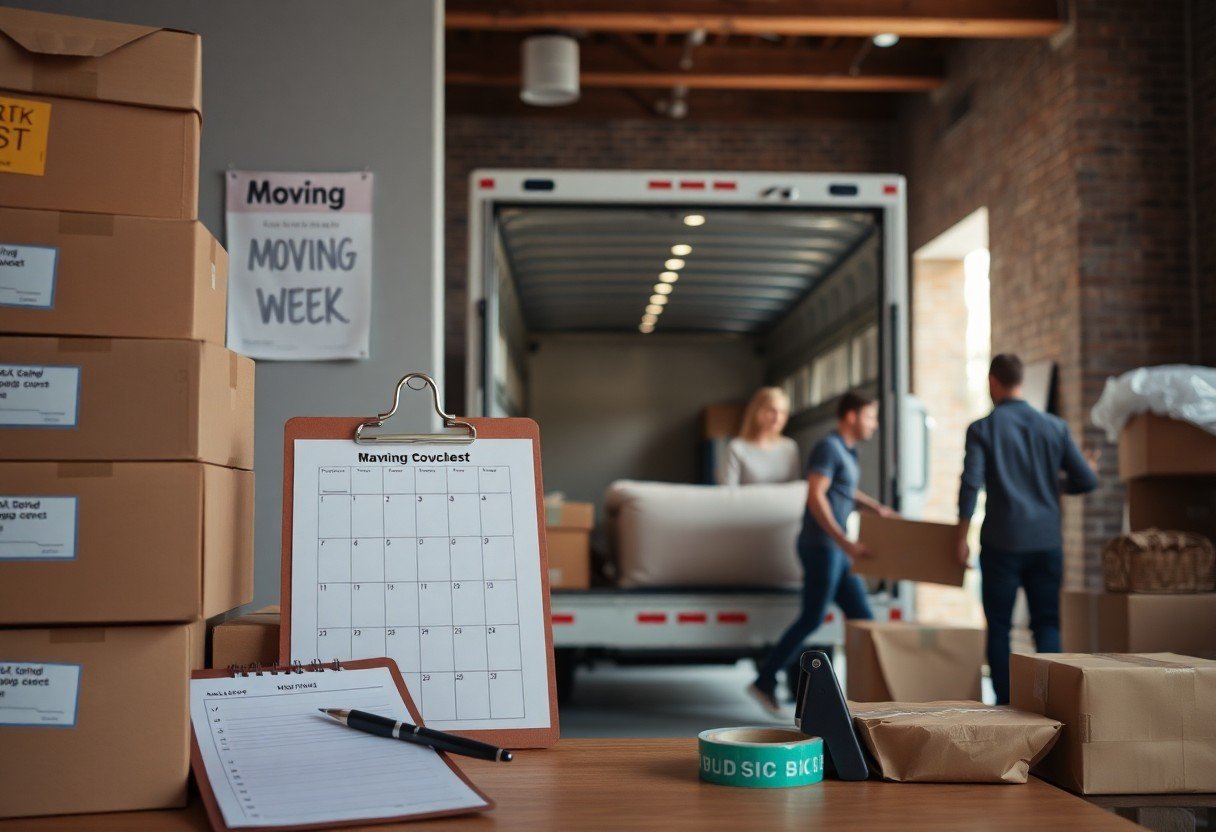
Organization reduces stress: you create a day-by-day checklist, label boxes clearly, set aside importants, confirm movers and utilities, and assign tasks so you stay in control during moving week.
Key Takeaways:
- Pack an importants box with toiletries, chargers, medications, important documents, a change of clothes, and basic tools; keep it in your car or with you.
- Confirm time, address, parking, elevator reservations, and contact details with movers the day before and the morning of the move.
- Label boxes by room and content, mark fragile items, and use a color-coded system for fast placement at the new home.
- Keep an inventory list and photograph high-value items and electronics before loading.
- Designate a single point person to answer mover questions, manage tips, and handle unexpected issues during the day.
Finalizing Logistics and Vendor Coordination
Finalize vendor confirmations, delivery times, and contact lists so you can handle last-minute changes. Assign a single point person for calls, keep digital copies of contracts accessible, and prepare payment methods for movers and services to prevent delays.
Confirming Mover Schedules and Arrival Windows
Confirm arrival windows directly with movers, share your address and gate codes, and ask for a mobile contact. You should keep contingency plans for delays and clear fragile-item labels so movers prioritize correctly.
Securing Parking Permits and Building Access
Arrange temporary parking permits and notify building management of move times; provide mover IDs and access codes so elevators and loading bays are reserved.
Gather all permit requirements, including fees, paperwork, and lead times, and submit applications early; verify truck dimensions and reserved zones with the city or HOA. Present proof of insurance and a written building access plan to management so elevator reservations, parking cones, and move-day staffing are confirmed.
Strategic Packing for the Final Countdown
Strategic packing means boxing nonvitals first and saving daily-use items for the final day; you should group bedside, tech and kitchen basics in an “open first” box. Follow quick pointers from the 9 Tips to Make Moving Less Stressful to speed the process.
Assembling the “First-Night” Essentials Kit
Pack an “open first” kit with pajamas, toiletries, chargers, basic cookware, medications and a change of clothes so you can sleep without unpacking.
Labeling and Inventorying Last-Minute Items
Label boxes by room and priority, number them sequentially, and keep a concise inventory on your phone so you can locate vitals quickly.
Create a color or abbreviation code, note top contents and fragile items on each box, and tally numbers in a simple checklist or spreadsheet. Photograph critical boxes and keep the master inventory accessible on your phone so you can direct movers and retrieve must-haves immediately.
Managing Utility Transitions and Documentation
You schedule utility start and stop dates, notify each provider of your move, and confirm final billing addresses so no services or charges catch you off guard.
Executing Final Meter Readings and Service Cut-offs
Complete final meter readings on moving day, photograph readings, and report numbers to providers to avoid disputed bills.
Centralizing Moving Contracts and Important Paperwork
Organize contracts and moving estimates in one folder, label copies, and keep digital backups for quick access.
Scan every document, tag PDFs by category, include contact numbers, insurance papers, and inventory lists so you can resolve disputes and file claims quickly.
Preparing the Physical Space for Transit
You clear pathways, measure doorways, and designate a staging area for packed boxes and furniture so movers can work quickly and avoid bottlenecks.
Implementing Floor and Wall Protection Protocols
Lay down protective runners or cardboard on floors, secure door frames with moving blankets, and tape wall corners to prevent scuffs during loading.
Conducting a Final Comprehensive Cleaning
Clean each room after items are removed: vacuum floors, wipe counters and baseboards, and clear debris so the space is spotless for the next occupants.
After moving out boxes and furniture, you perform targeted cleaning: disinfect high-touch surfaces like switches and handles, steam-clean rugs or schedule pros, degrease ovens, wipe inside cabinets and appliances, and patch nail holes or touch up paint to improve presentation and reduce disputes over deposits.
Sustaining Efficiency and Personal Well-being
You can protect energy by scheduling short breaks, delegating tasks, and prioritizing sleep so decisions stay clear and packing stays efficient.
Planning Low-Effort Nutrition and Hydration
Plan simple meals and grab-and-go snacks, pre-fill water bottles, and stash electrolyte packets so you avoid long grocery runs and keep everyone’s energy steady.
Coordinating Care for Children and Pets
Arrange trusted childcare or pet-sitting for moving day, and coordinate drop-off times so you stay focused on logistics without constant interruptions.
When you plan care, pack a comfort bag with favorite toys, snacks, medications, and important documents. Give caregivers a clear timeline, contact numbers, and a brief task list so they know responsibilities. Consider hiring a sitter to watch them at your old home or dropping them off with family to reduce moving-day stress. Label items and schedule check-ins to maintain calm.
Executing the Final Move-Out Walkthrough
You should follow a room-by-room checklist during the walkthrough, inspecting walls, fixtures, appliances, and light bulbs, noting damages and taking timestamped photos for records before handing over keys.
Verifying Empty Storage Spaces and Cabinets
Open every closet, cabinet, attic hatch, and basement nook, scanning for personal items, loose screws, or hidden trash, and sweep or wipe surfaces so the space is clean for inspection.
Securing the Property and Final Key Handover
Lock all windows and exterior doors, activate alarm systems if present, turn off noncrucial utilities, and organize keys, remotes, and access codes into a labeled packet for the final handover.
Arrange a clear handover time with the landlord or agent, bring a signed checklist and photo evidence of the property’s condition, obtain a signed receipt for keys and any deposit agreements, and verify contact details for post-move questions; if locks change, provide copies and document who received them.
Summing up
From above you should keep an importants box, confirm the movers’ schedule, label boxes clearly, set aside valuables, and assign tasks to helpers so your move stays organized.
FAQ
Q: How should I plan and prioritize tasks during moving week to prevent chaos?
A: Create a day-by-day checklist that breaks tasks into manageable steps. Start by listing nonnegotiable deadlines like movers’ arrival and utility shutoffs. Prioritize necessarys such as packing a box of items you’ll need first, securing important documents, and clearing pathways for movers. Assign specific tasks to family members or helpers and set realistic time blocks to avoid last-minute rushes.
Q: What packing strategies reduce stress on moving day?
A: Pack room-by-room and label each box with its destination and a short contents list. Prepare an “open first” box with toiletries, phone chargers, basic cookware, a change of clothes, and first-night bedding. Use small boxes for heavy items and wrap fragile items in towels or bubble wrap. Photograph electronic setups before disconnection to simplify reassembly. Keep hazardous liquids and perishable foods separated and transport them yourself.
Q: How can communication with movers and helpers be handled to avoid confusion?
A: Confirm arrival time, contact numbers, and exact pickup/drop-off addresses 48 hours before moving day. Provide a clear floor plan or labels showing where each box and piece of furniture should go. Assign one person as the point of contact to answer questions and make decisions on site. Keep a printed inventory and copies of permits or building rules to show movers when needed.
Q: Which personal preparations should be done to ensure a smooth moving day?
A: Arrange childcare or pet care so the moving area stays safe and calm. Pack an overnight bag with medications, important documents, chargers, basic toiletries, and a change of clothes. Defrost and clean the refrigerator days before moving and dispose of perishable food. Schedule utility transfers and take final meter readings, and have cash on hand for tipping or unexpected expenses.
Q: What should be done after movers leave to settle in without chaos?
A: Walk through the new home with the inventory list to mark off delivered items and note any damage. Unpack necessarys first: bed linens, basic kitchen items, and toiletries. Test major appliances and confirm utilities are functioning. Set aside time to tackle one room at a time to avoid feeling overwhelmed, and update your address for mail and important accounts.